mobile.de / Adevinta
Designing the electric vehicle search experience
The challenge
Germany’s largest vehicle marketplace, mobile.de, had no electric vehicle (EV) search experience. With growing demand for EVs, this was a major problem. A best-in-class EV search and discovery experience was needed.
Impact
Key metrics skyrocketed:
- +14% increase in messages to dealers selling EVs (Lead KPI)
- +38% increase in EV searches
- +21% increase in EVs viewed
- +6% increase in EV lead ratio
The EV experience transformed mobile.de into the go-to platform for EV buyers in Germany. Used by hundreds of thousands of people every month across Web, iOS and Android.
My role
As the sole designer, I led the design strategy, user research, and UX execution from end to end. Turning a non-existent EV search experience into a successful one.
Covering:
- User research & discovery (interviews, competitor analysis and quantitative insights)
- Experience design & prototyping (from wireframes to high-fidelity designs)
- Stakeholder collaboration & testing (A/B tests, iterations, and launches)
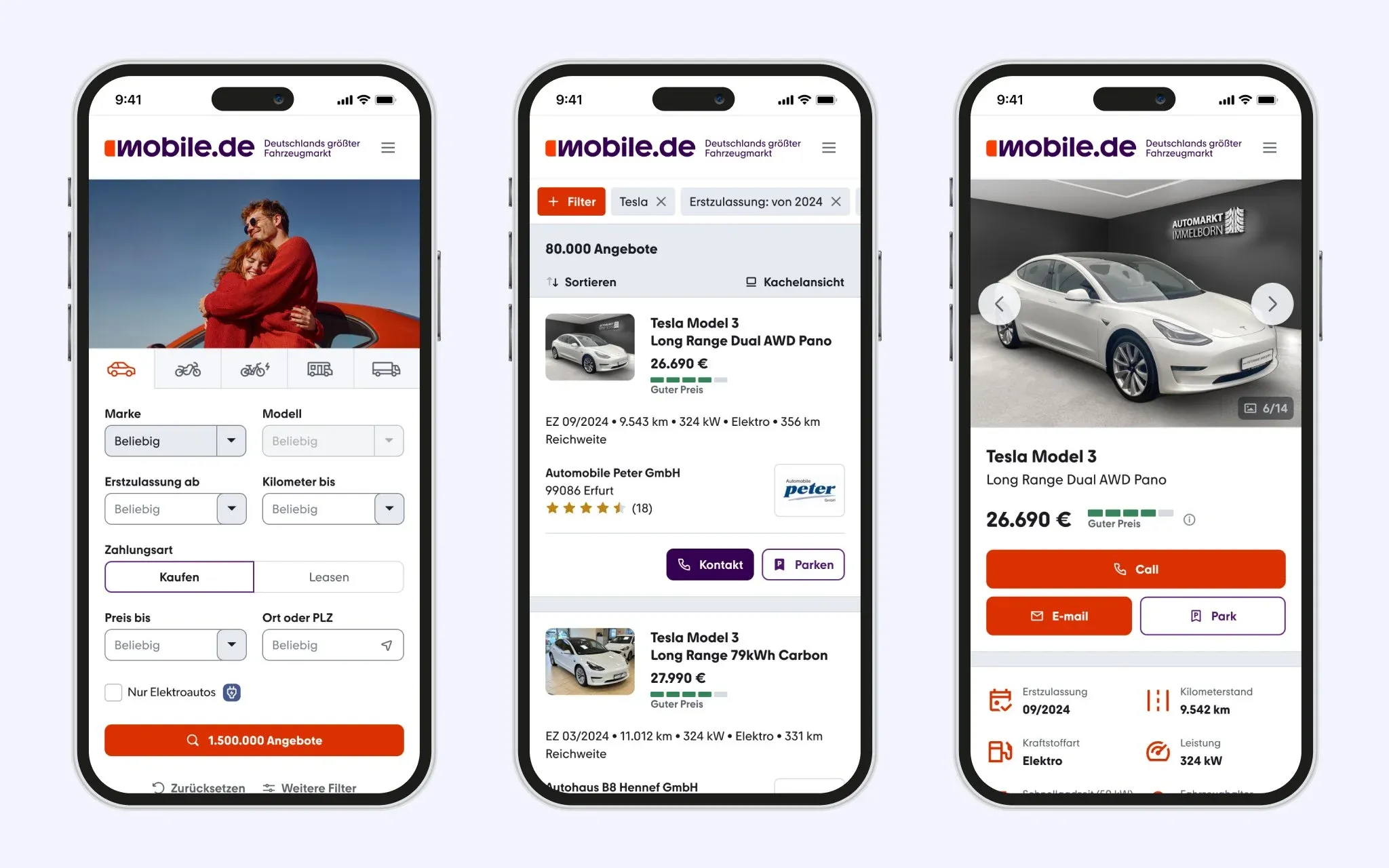
“I led the design. Shipping a range of features that led to a big impact for users and the business.”
The context
In early 2023, mobile.de (AutoTrader being the UK equivalent), faced a growing problem: as electric vehicles surged in popularity, the platform was falling behind.
EV buyers struggled to find the right cars, dealers lacked visibility, and the search experience for EVs was poor. mobile.de had to act fast, or risk losing users to competitors.
I was tasked to solve this problem alongside a Product Manager and two full-stack Developers.
Discovery
The Discovery consisted of four main activities:
- User interviews
- Studies and reports
- Testing the current experience and competitor experiences
- Expert interviews
User interviews
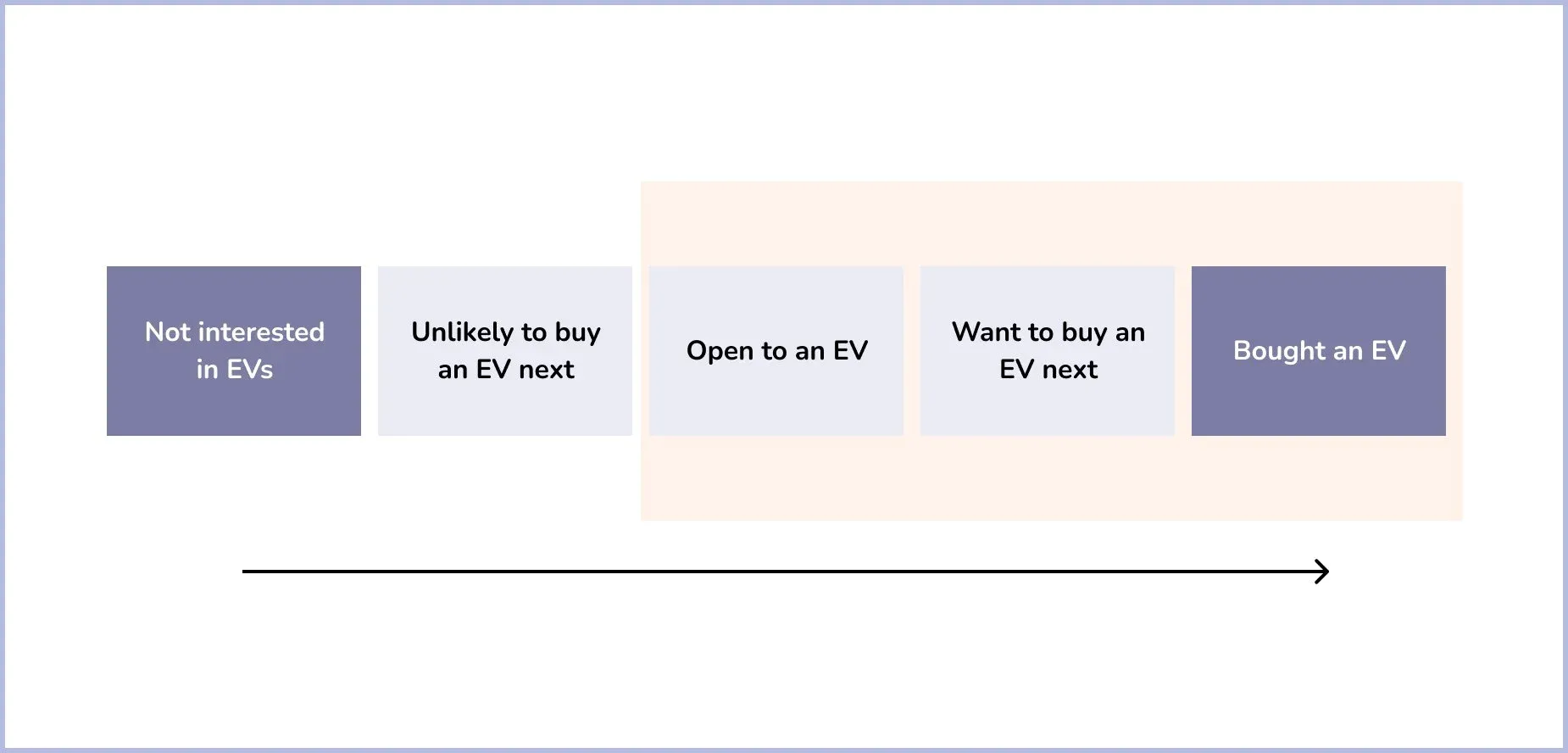
We recruited three groups, split by their acceptance towards EVs and journey stage:
- Recent EV buyers
- Open to buying an EV, but are hesitant
- Want an EV as their next vehicle
“EVs were surging in popularity, the mobile.de platform was falling behind.”
Recent EV buyers
We heard from recent EV buyers the struggles and pains they had to overcome to feel confident they were making the right purchase.
Open to buying an EV
We heard from people open to an EV, alongside petrol and diesel vehicles. They were considering EVs, but they needed reassurance on certain aspects.
Want an EV
We heard from people ready to buy an EV that the digital tools available to them were poor.
Quantitative research
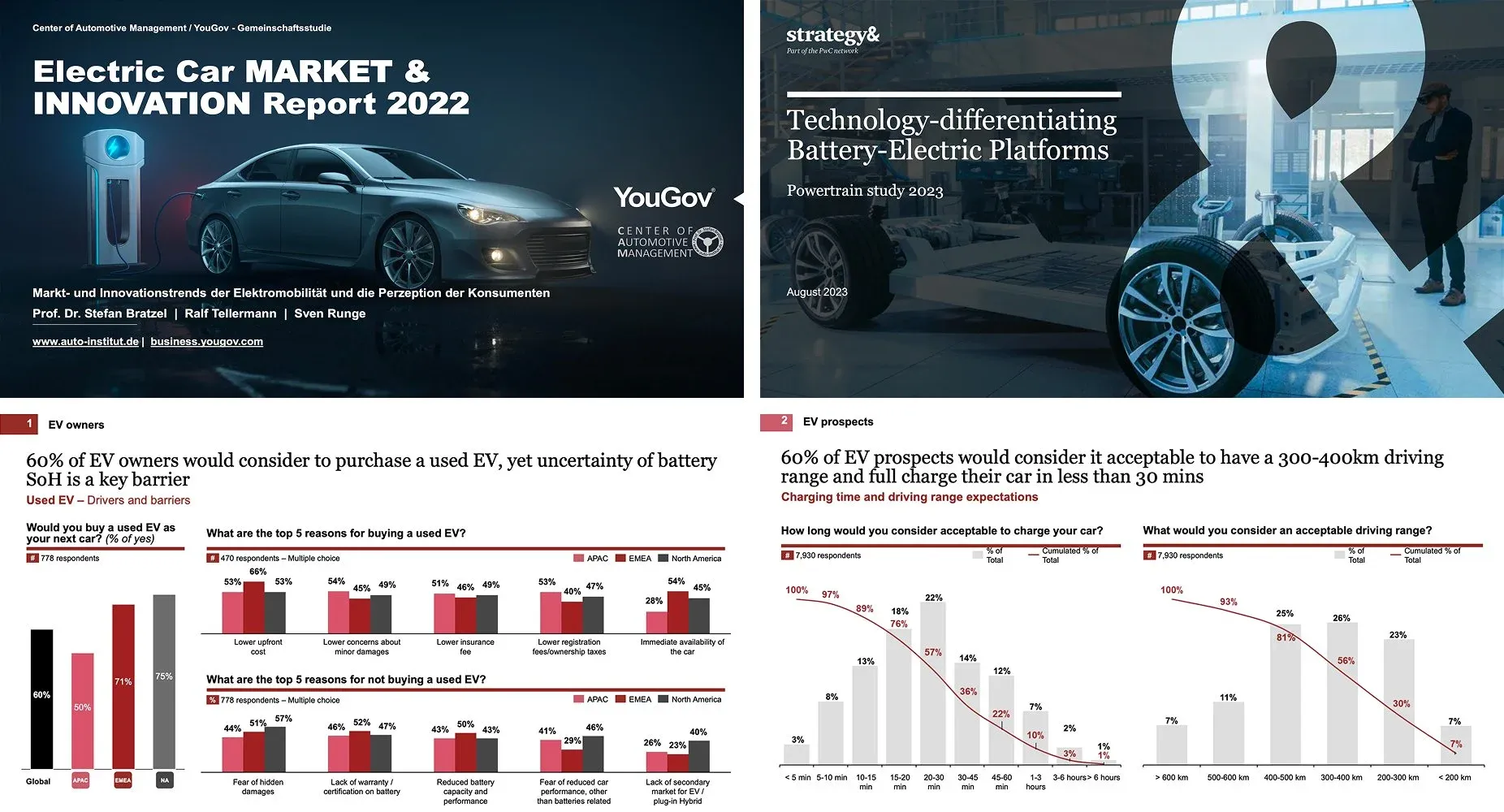
To complement our qualitative research, we read reports from quantitative studies from market research companies who had surveyed thousands of people within Germany, about a number of EV topics.
This information and data gave us further confidence around the insights we had gleaned from our own user research, and helped us prioritise.
Analysing the current and competitor experiences
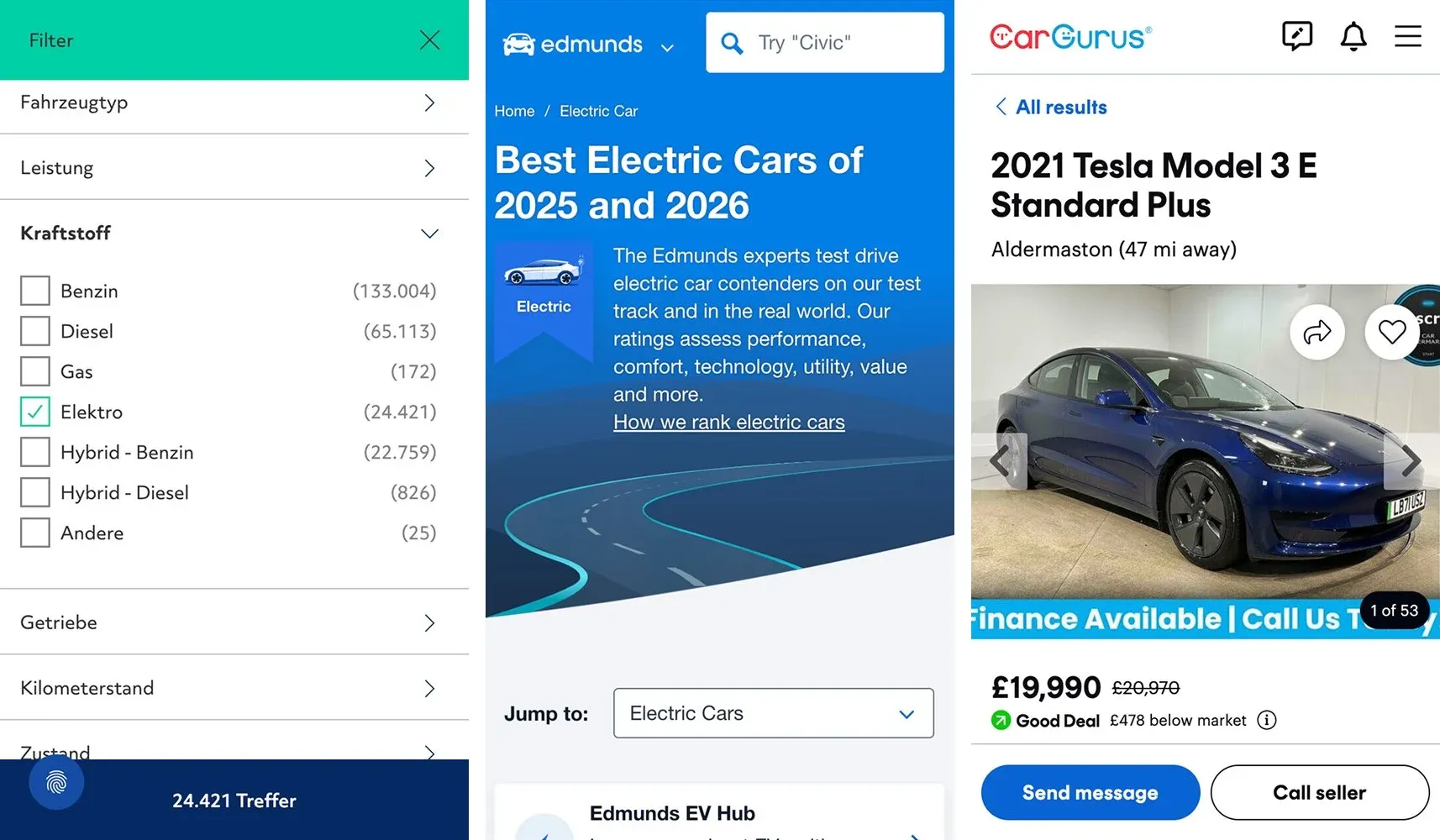
As part of the user interviews we observed participants using the live mobile.de EV search experience. Asking them to search for the EVs they want and watching where they encountered difficulties.
This was enlightening. Very quickly we saw the scale of the task ahead of us. Apart from a single electric fuel type filter, participants had nothing to work with.
In addition to testing the current mobile.de EV experience, we asked them to use equivalents from the US and UK. This proved a useful exercise, we saw quickly the surprise and delight that some of the EV experiences brought participants.
“Apart from a single electric fuel type filter, users had nothing to help them find EVs.”
Key research takeaways
- EV buyers struggle to find relevant EVs – Existing mobile.de experience was insufficient
- Uncertainty leads to hesitation – Many potential buyers were stuck due to range anxiety, unclear charging information and government incentives
- Competitors provided better tools – UK and US platforms offered richer data, making EV searching easier
Expert and stakeholder interviews
In addition to the user interviews, we also spoke with EV experts who had been working in the industry for some time.
They explained what they needed as a first time EV buyer, the issues the industry needs to overcome for EVs to be heavily adopted and their own suggestions.
Insights, opportunity areas and ideation
With a good amount of data collected and insights gleaned through the four discovery activities, we had a solid foundation to ideate, design and build from.
“With insight gleaned, we were in a solid position to build and test.”
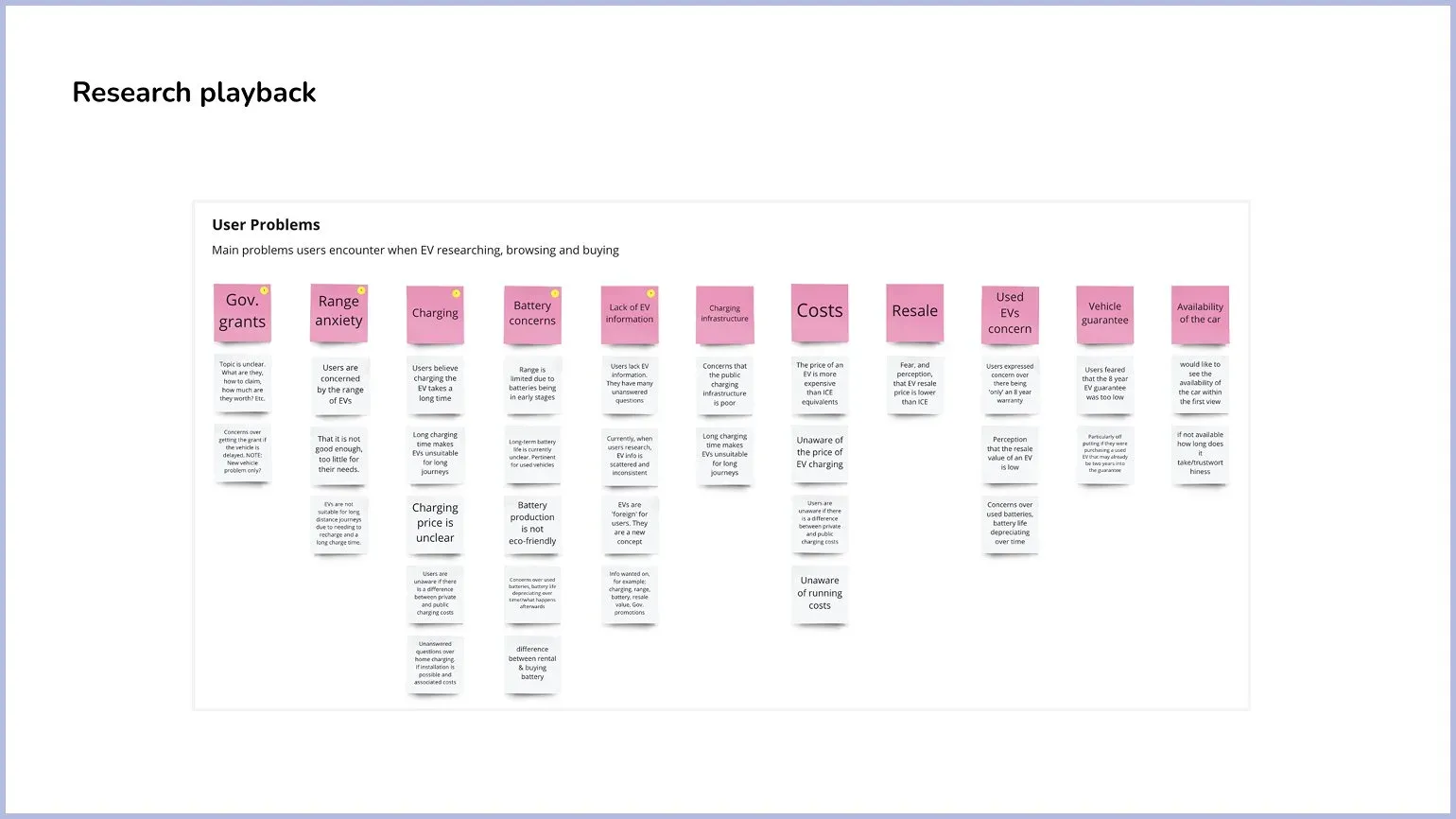
Using the RICE framework, stakeholder input, and product intuition, we honed in on the biggest user problems:
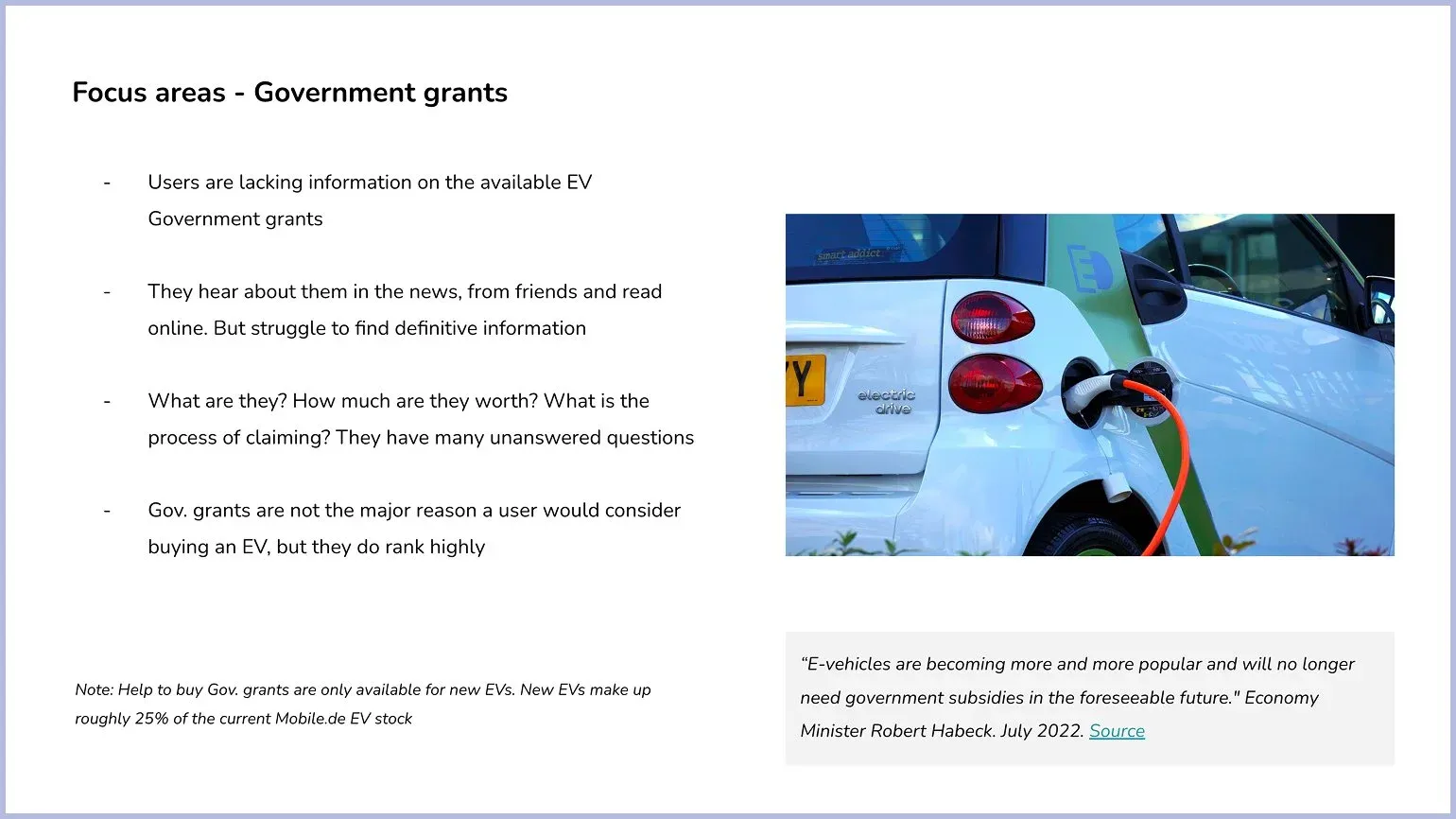
- Government grants
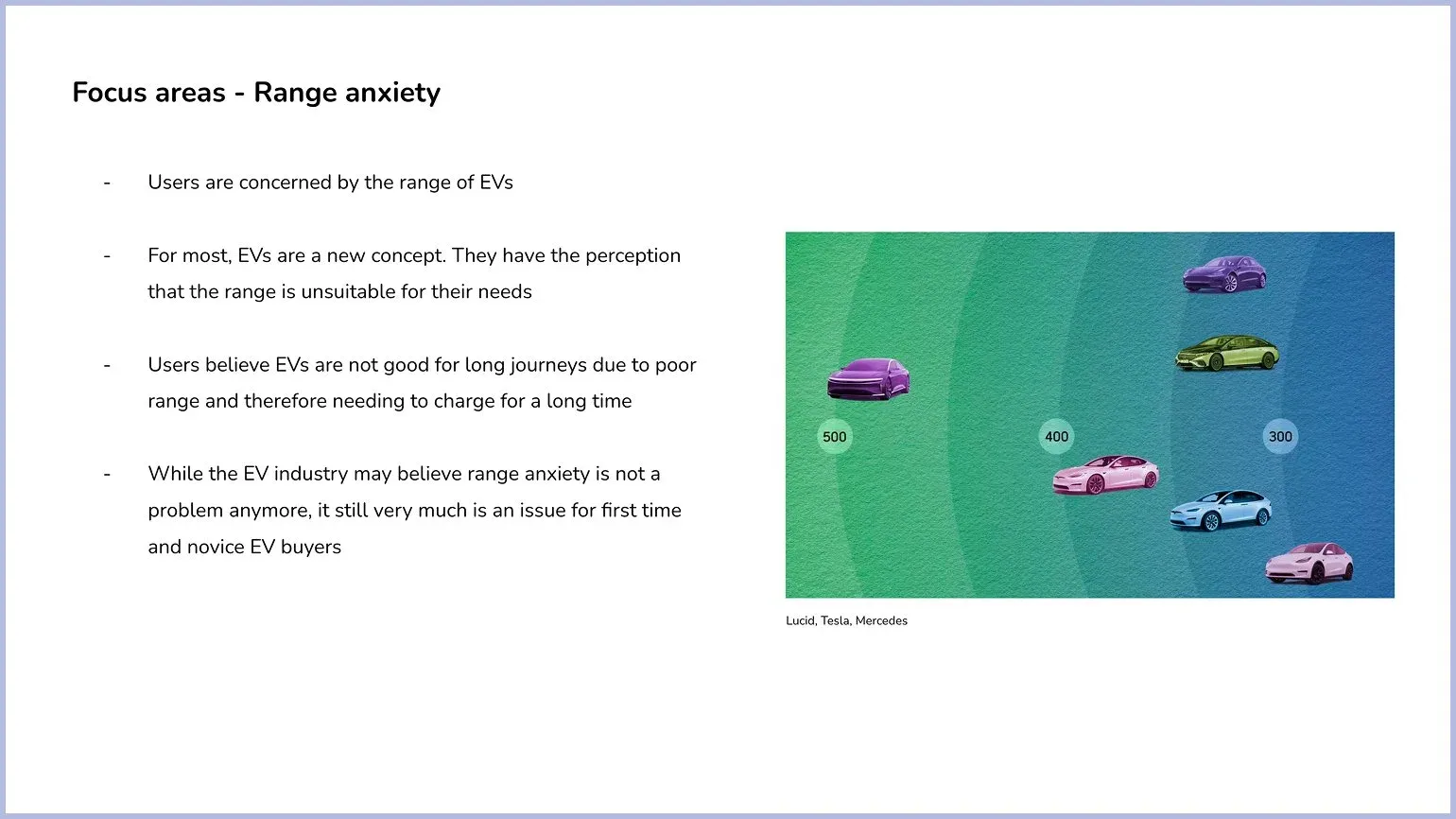
- Range anxiety
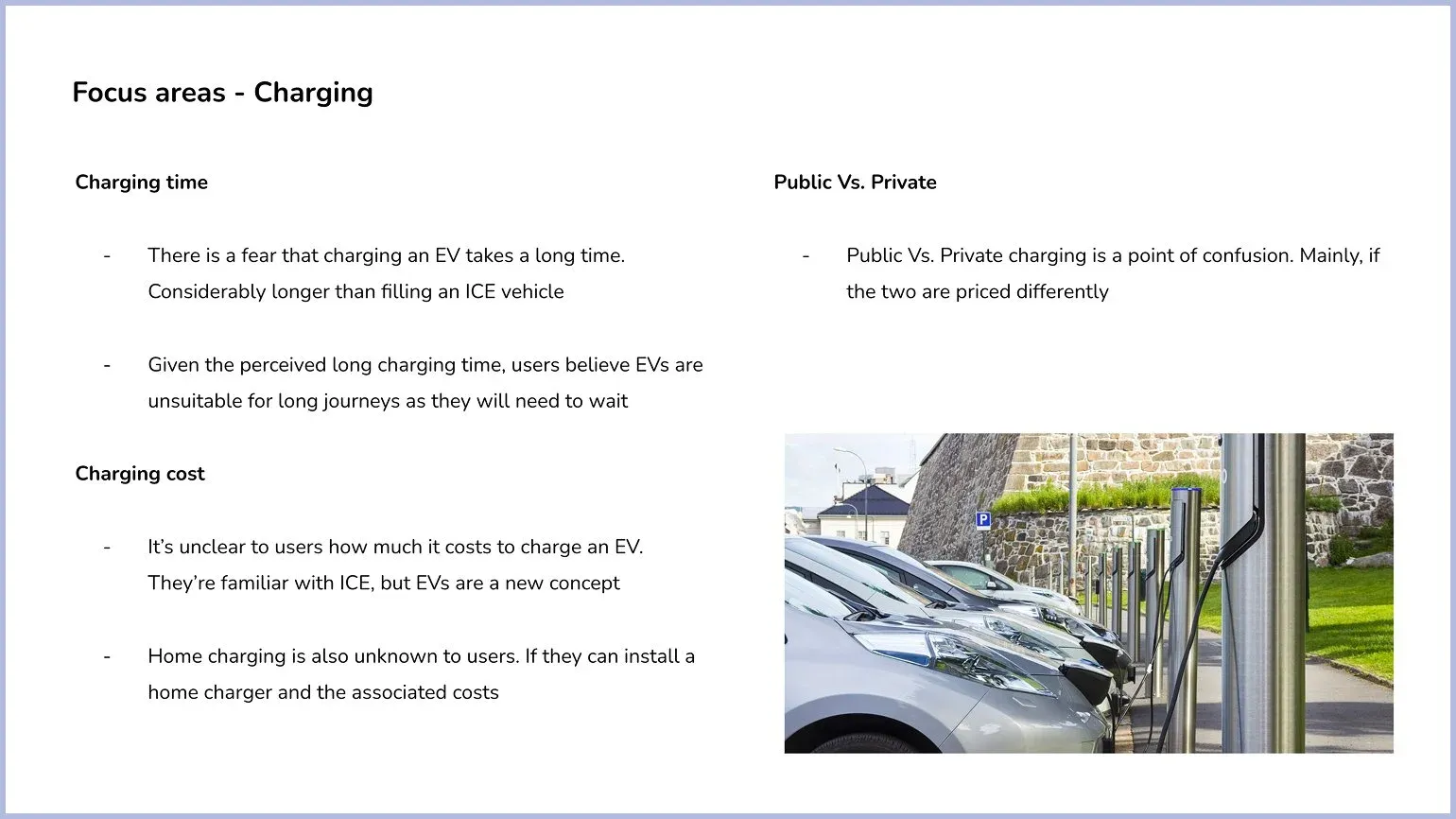
- Charging
These three areas were consistently cited in user research as key decision-making barriers and ranked highly in quantitative studies.
“Using RICE and stakeholder input we honed in on the biggest user problems.”
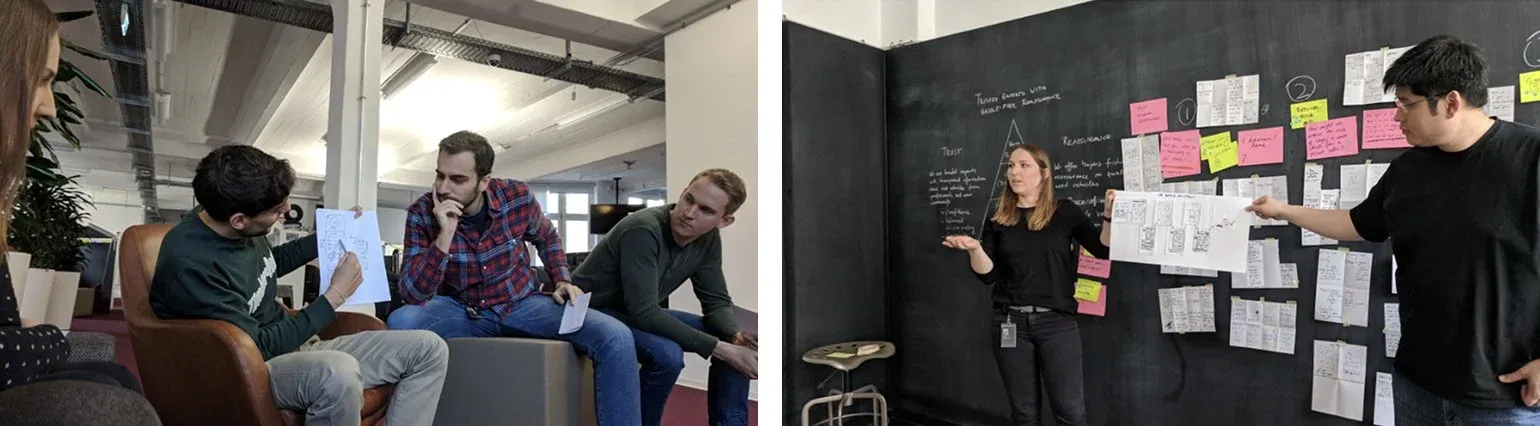
Concept cards and testing
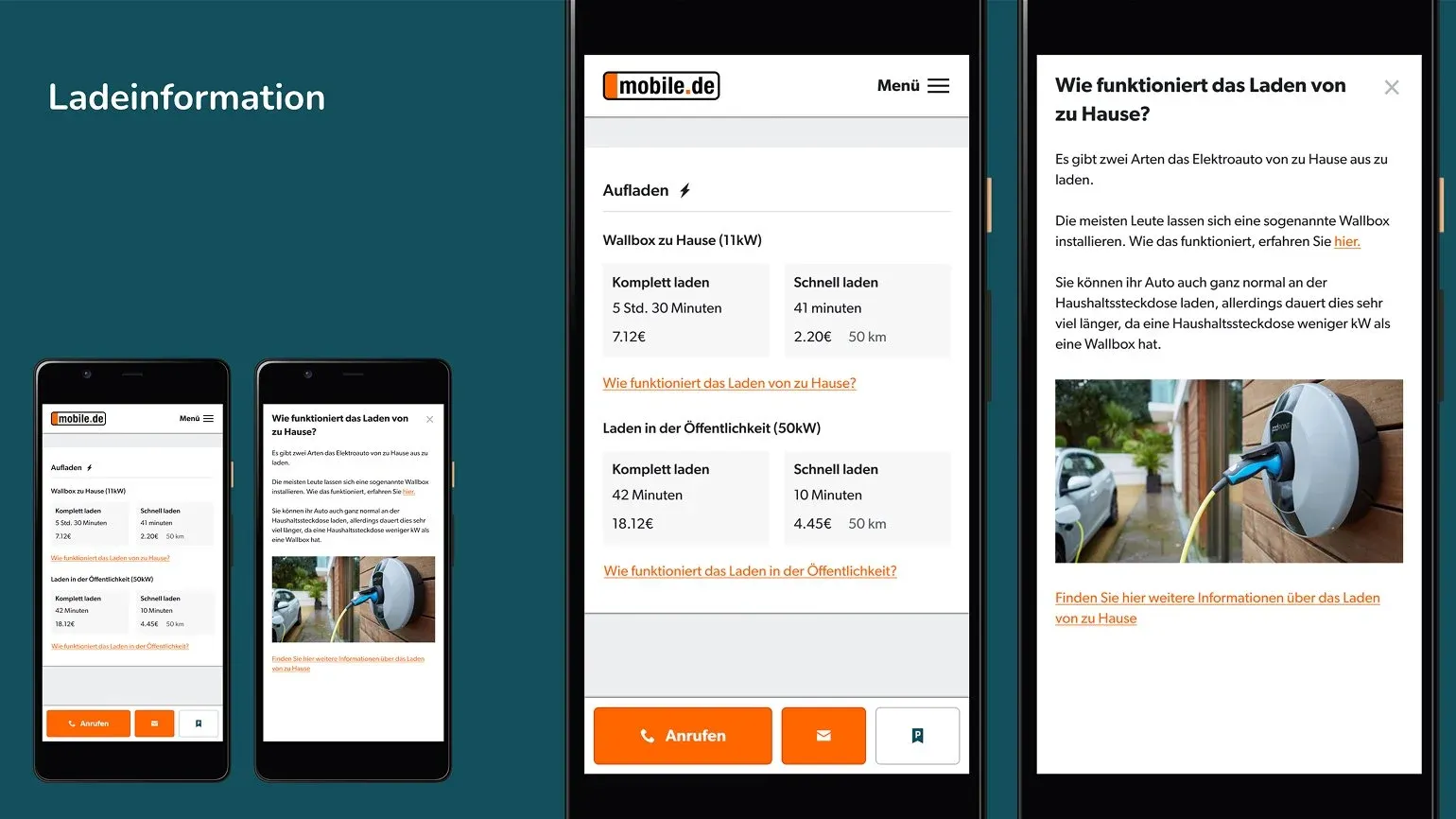
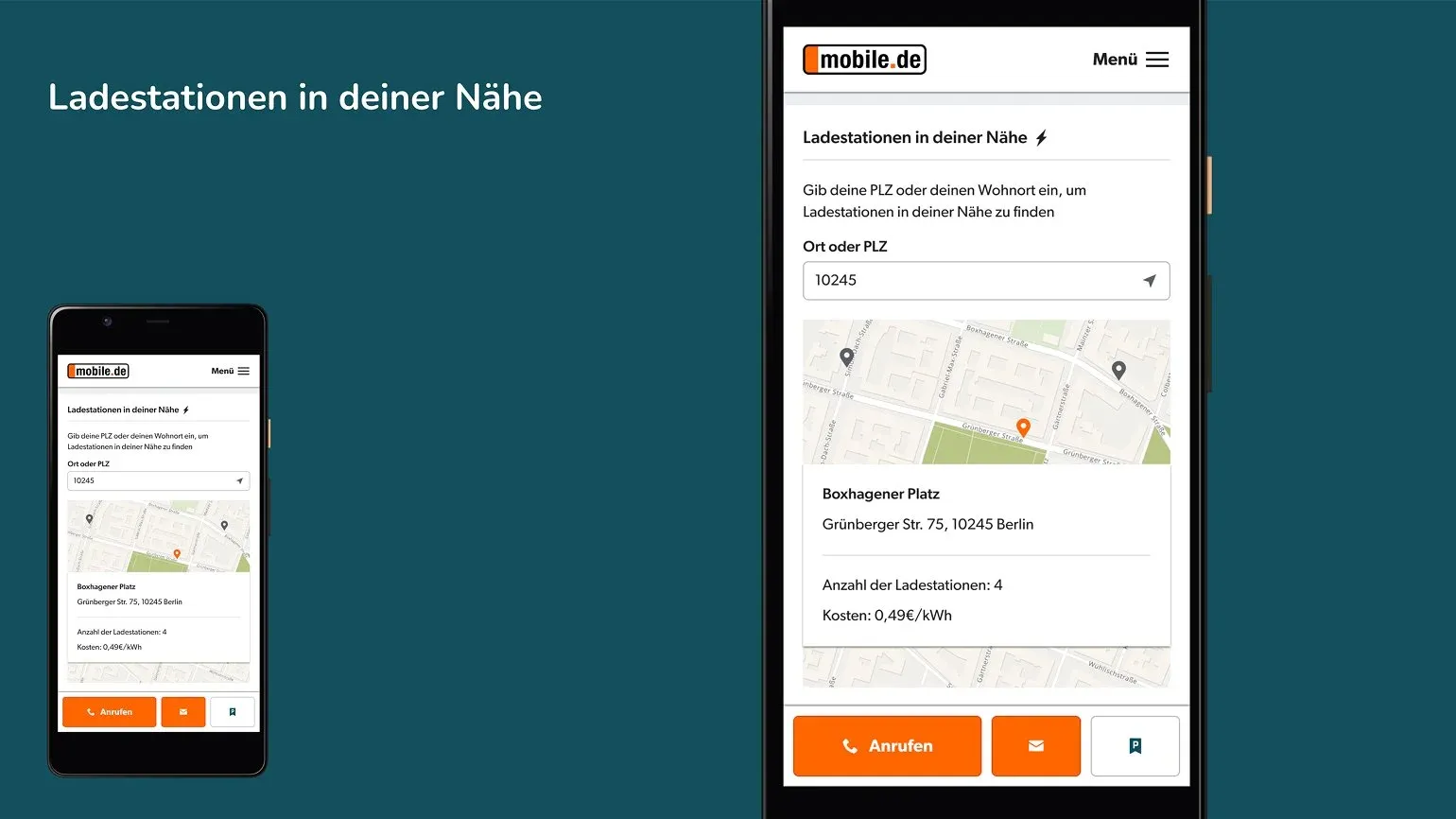
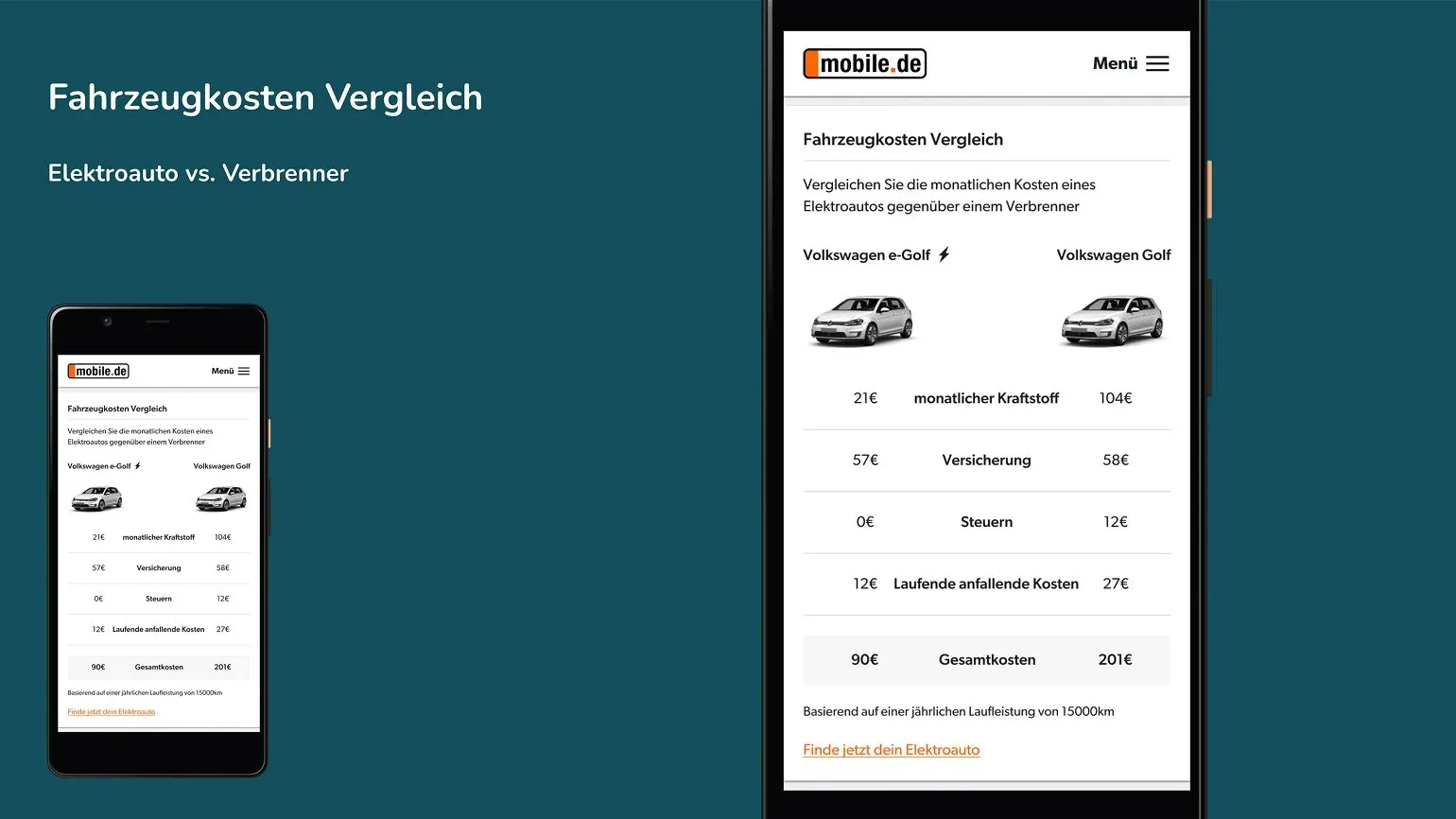
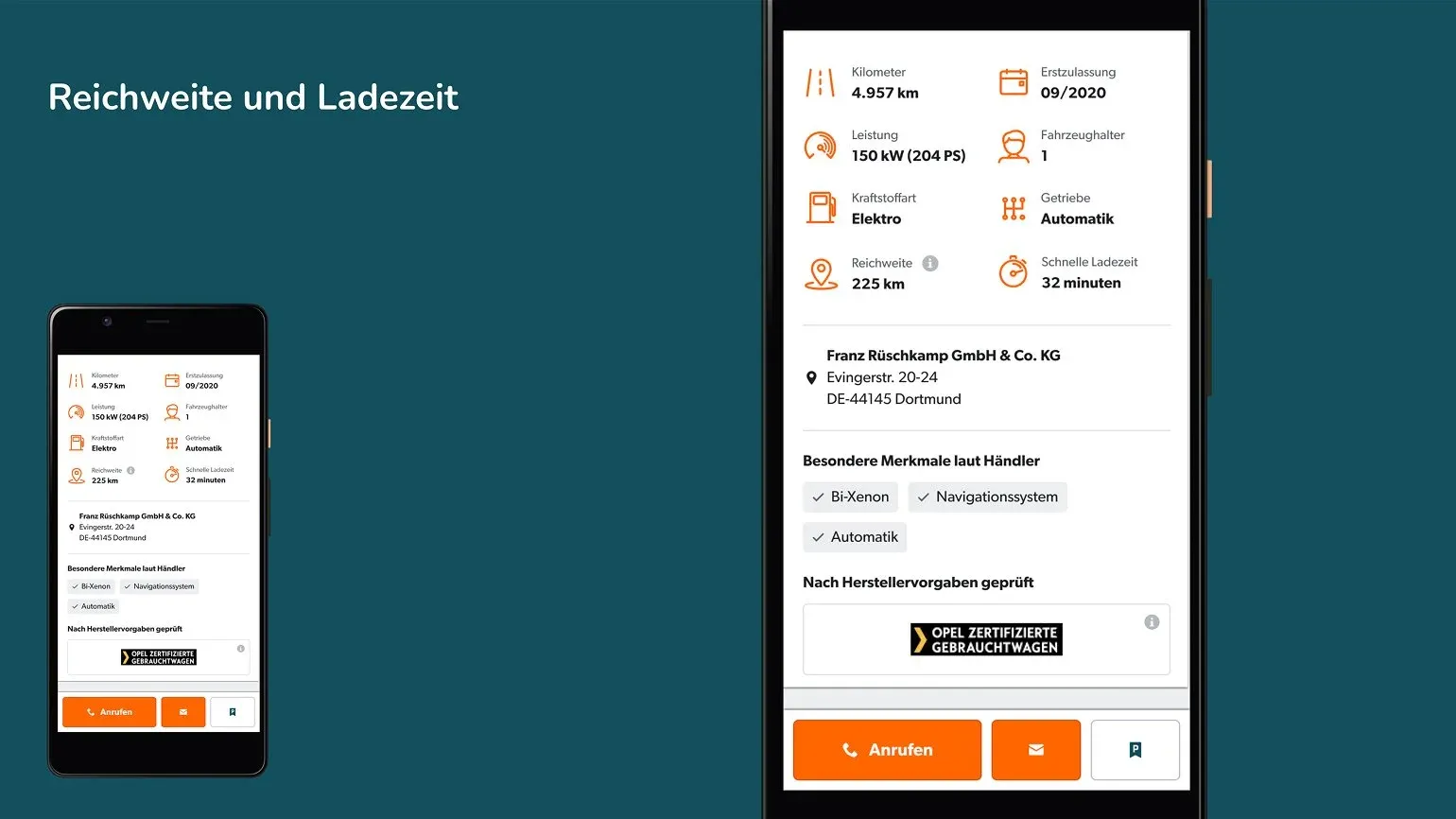
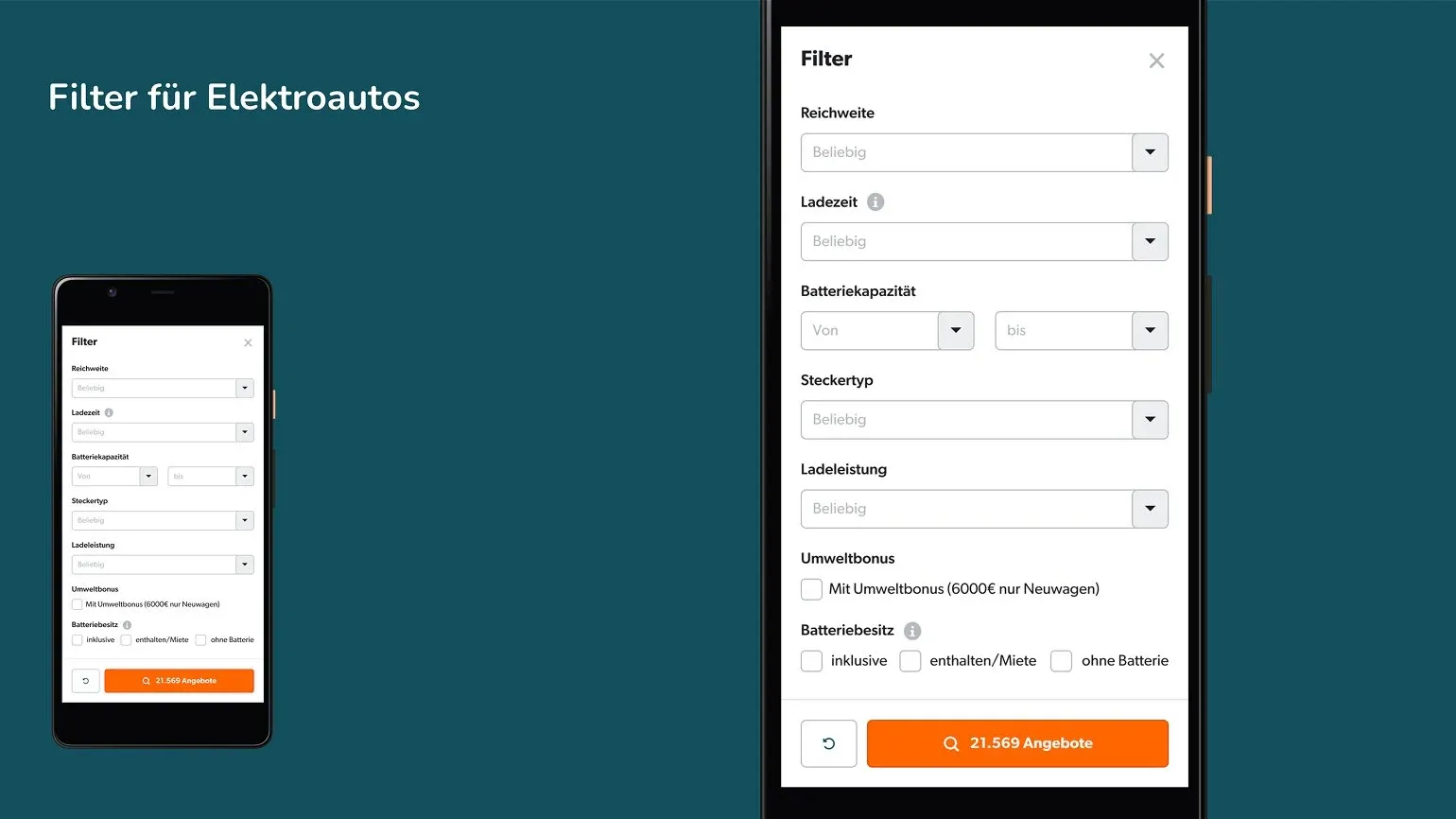
An approach I utilised was concept cards. A single slide containing the name of the idea and a product mock-up.
This approach is lean. I could produce a concept card quickly and throw it away if it tested poorly. Or iterate upon the idea following user feedback.
“A single slide containing the name and UI mock. A useful tool when exploring ideas early on.”
Prototype testing
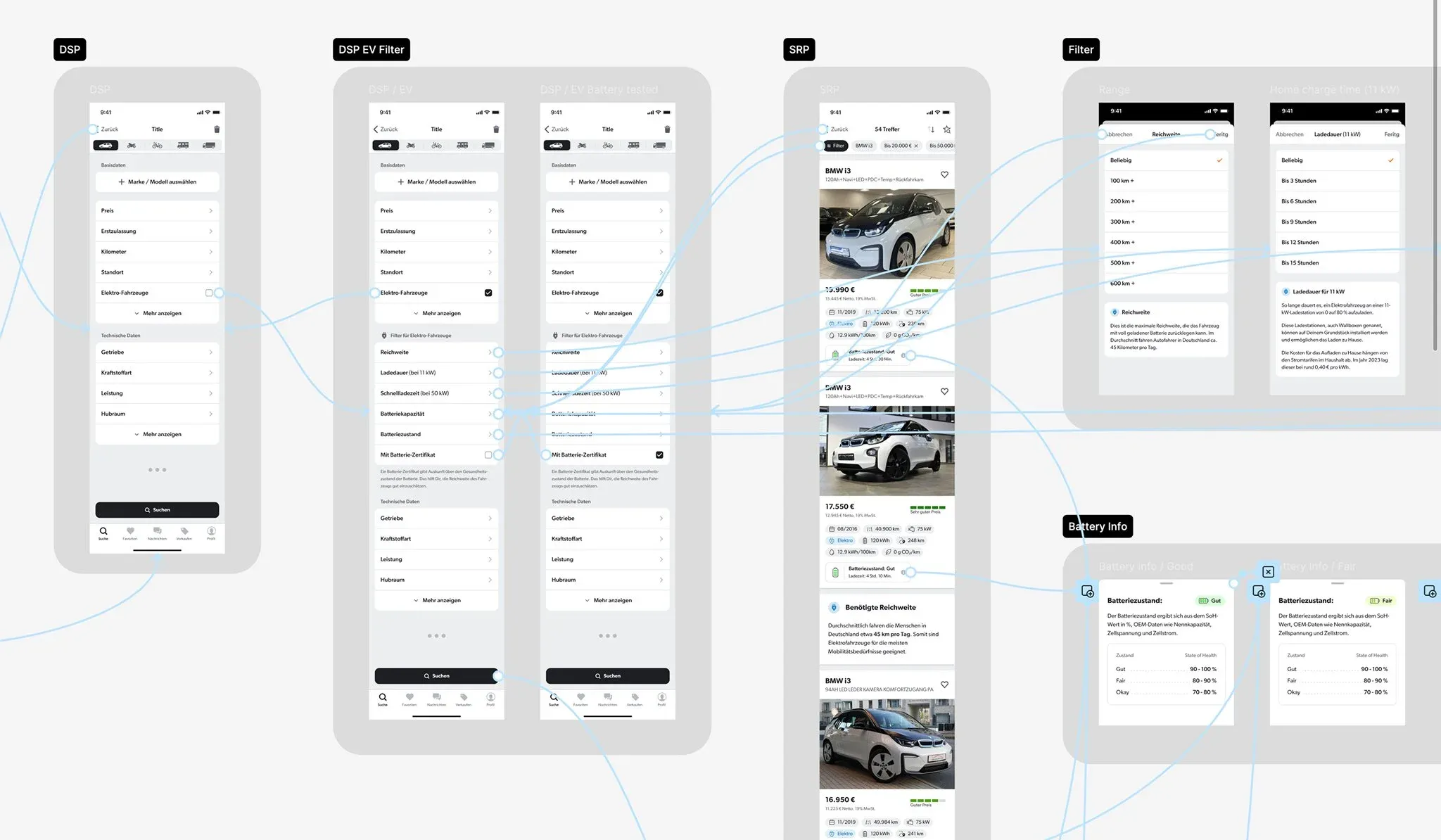
With feedback gathered, we reduced our large amount of ideas to the best performing. From there I built these ideas out into prototypes that covered key user journeys.
These too were tested with active car buyers, a mix of those wanting an EV and those considering an EV as their next car.
From there I got into the cycle of testing, iterating and testing again.
“Testing, iterating and testing again.”
Launching, A/B testing and iterating
With prototypes tested and iterated upon, we had a solid backlog of ideas that were ready to be put live. Smaller ideas were shipped immediately, to get the value out asap.
We soon got into the flow of a well functioning product team. Shipping, testing and iterating upon the functionality we were launching.
The mobile.de electric vehicle (EV) experience
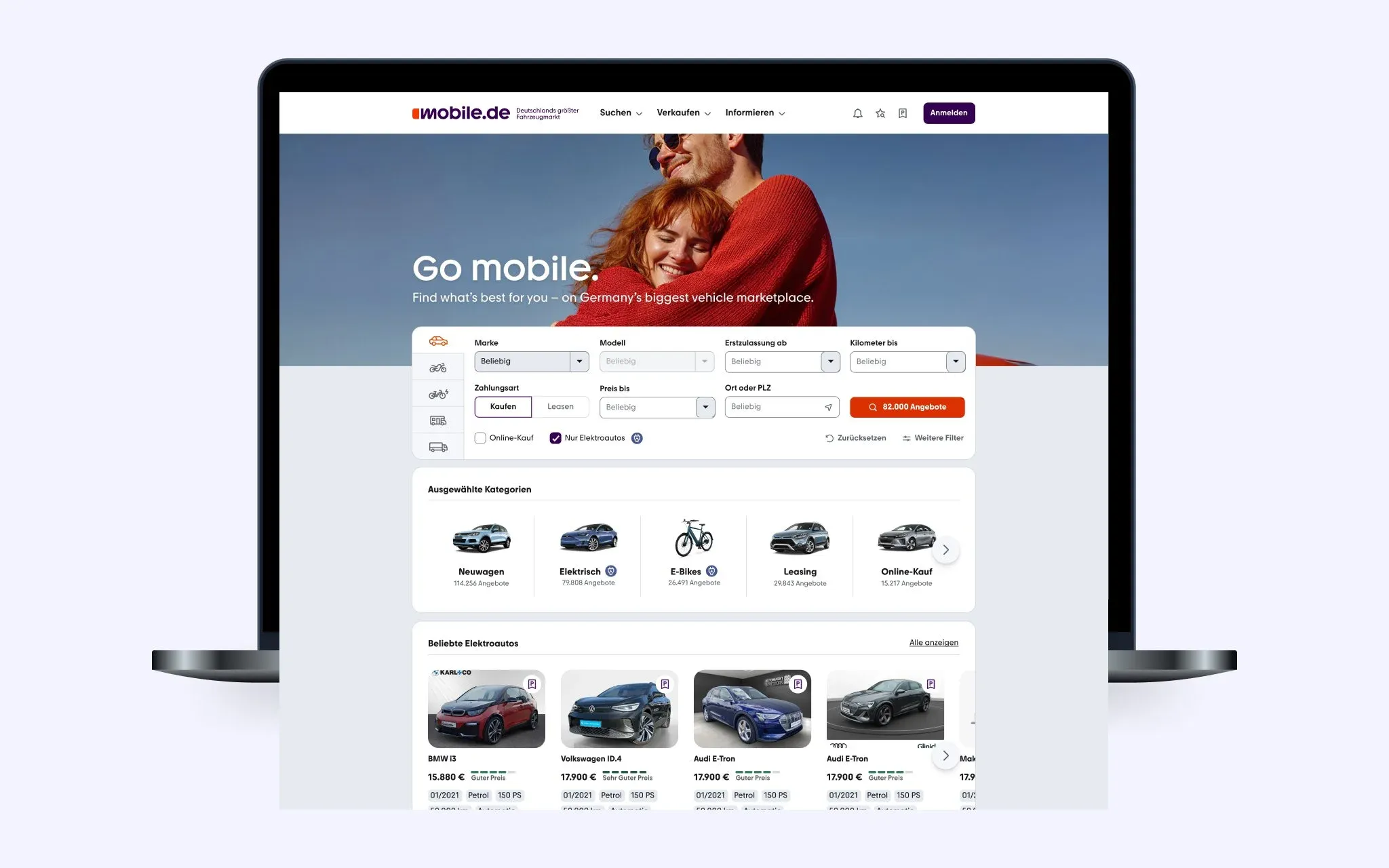
Home
An EV presence. Given mobile.de’s strong market position, Home is the starting point for the majority of user journeys. Previously, there was no mention of EVs.
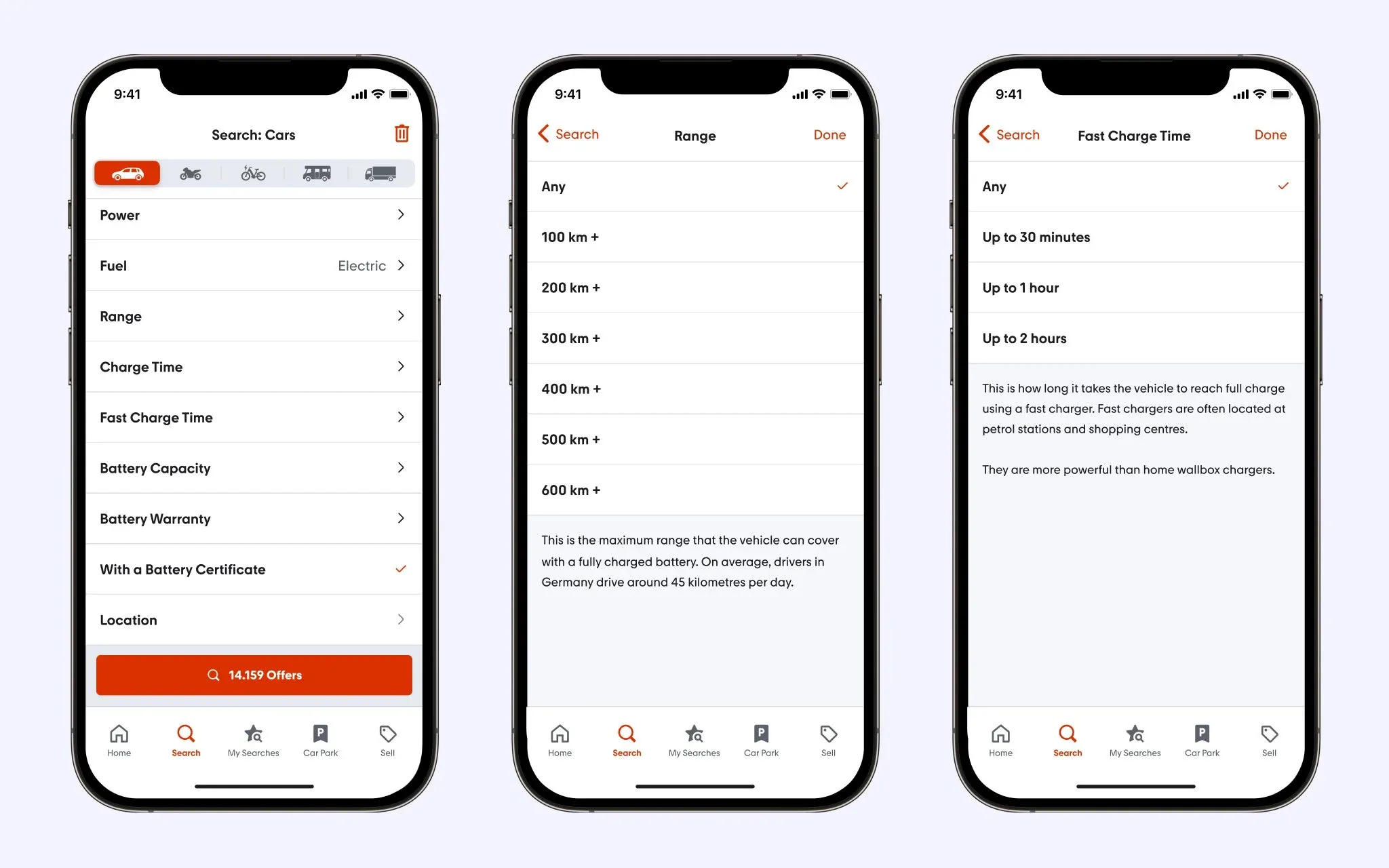
Filters
Users can now easily find EVs that meet their mobility needs. Filters for range, charge time, fast charge time and used EVs that have had their battery tested.
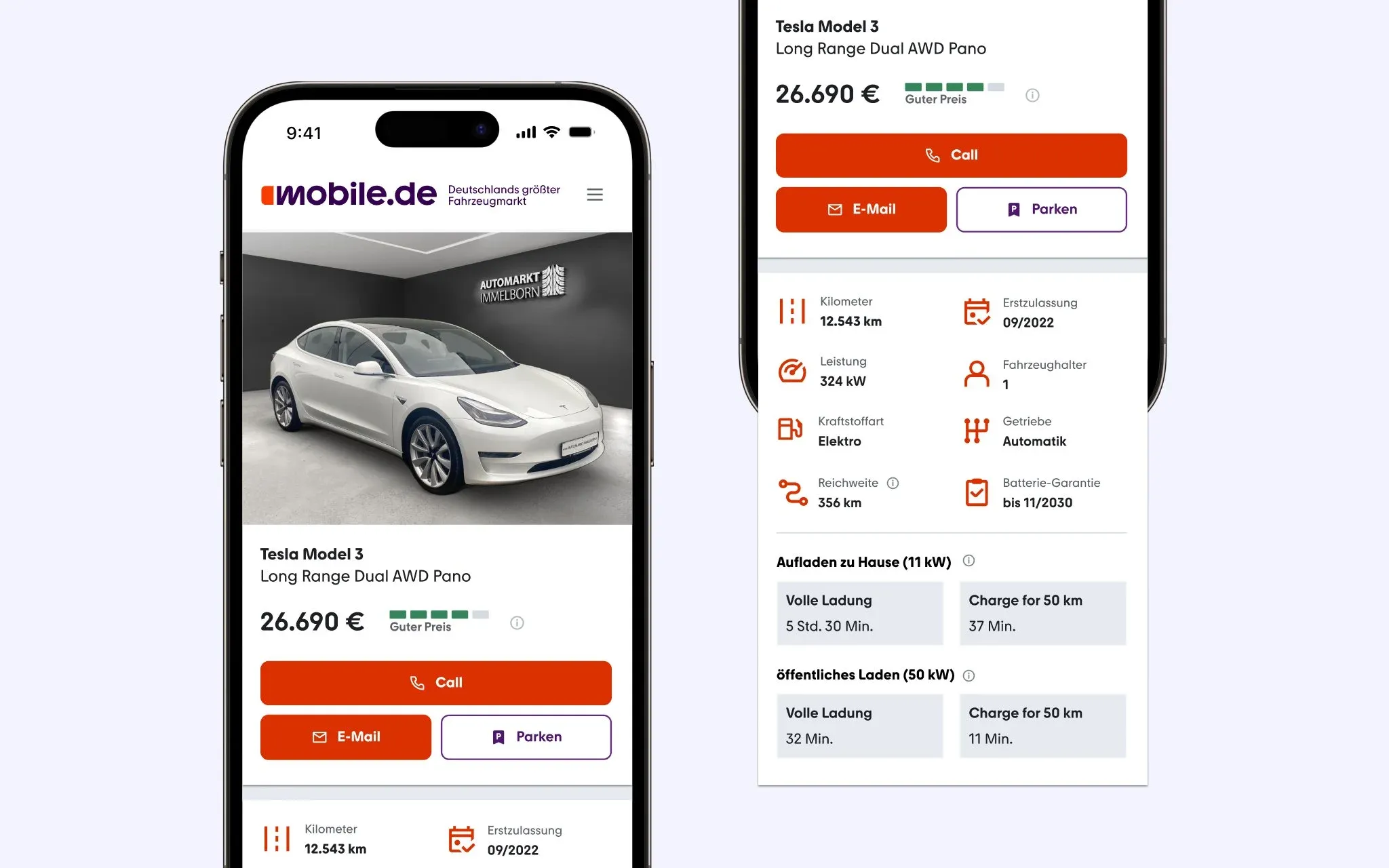
Listings
EV listings now show vehicle data buyers need, such as range and charge time. As well as information about public and private charging.
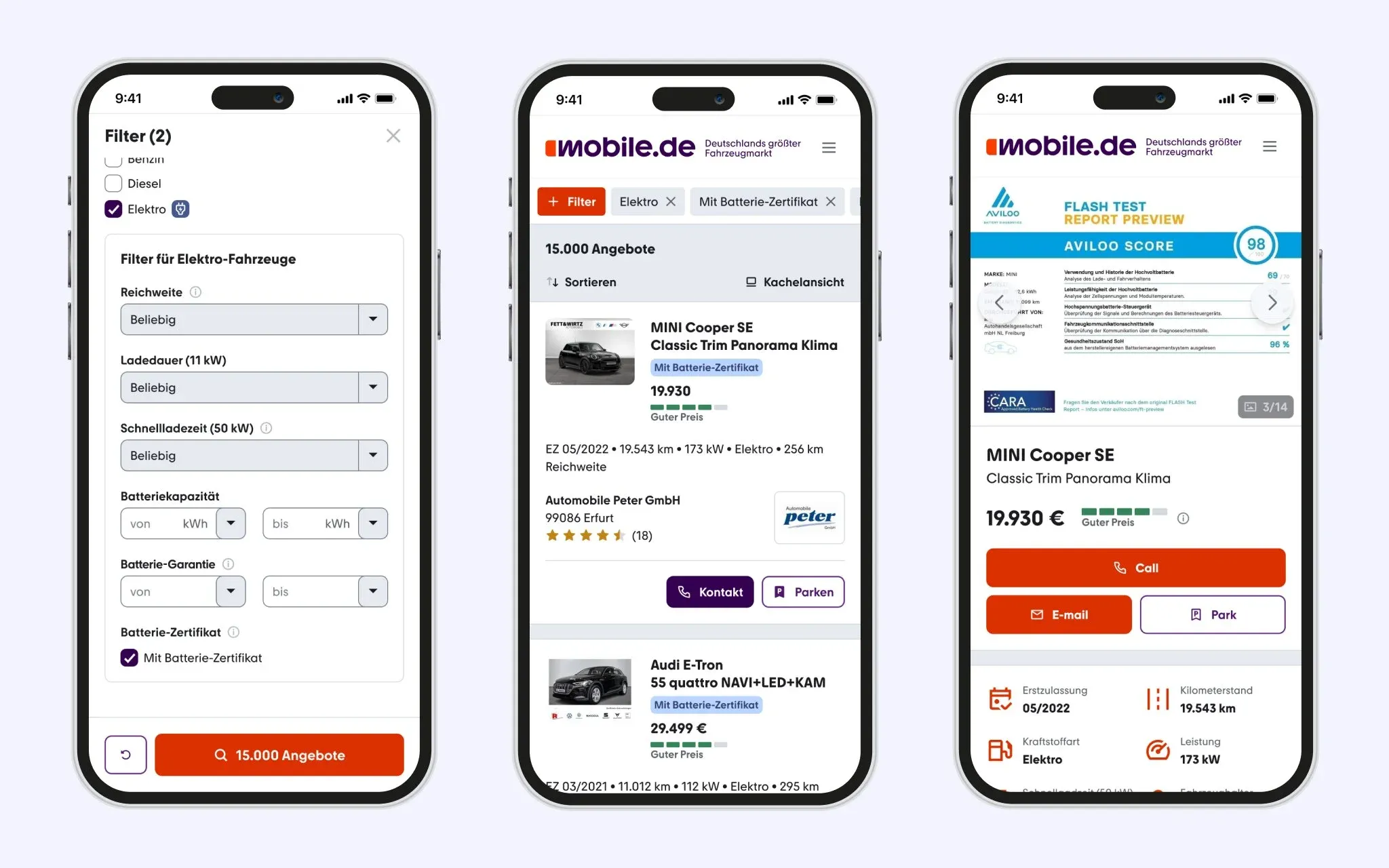
Battery testing and certificate
Used EVs are tested by independent companies and issued a report. We enabled Dealers to mark their tested EVs and upload the report for buyers to read.
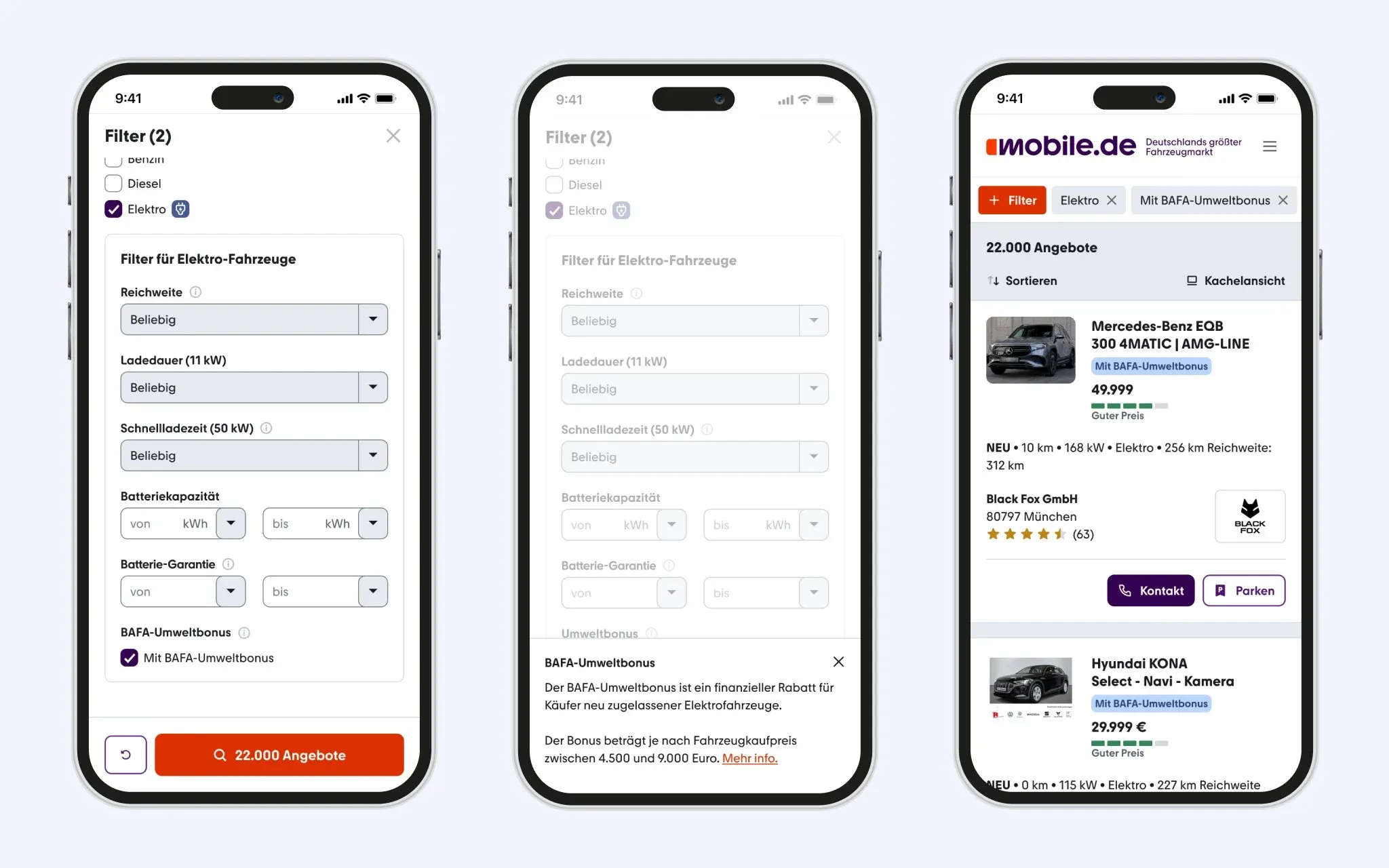
Government Grants (Umweltbonus)
The German government issued grants to people that bought new EVs. We gave Dealers the ability to mark their vehicles that qualified. For buyers, they could filter for these vehicles, learn about the bonus and find qualifying EVs.
Impact
Key metrics skyrocketed:
- +14% increase in messages to dealers selling EVs (Lead KPI)
- +38% increase in EV searches
- +21% increase in EVs viewed
- +6% increase in EV lead ratio
The EV experience transformed mobile.de into the go-to platform for EV buyers in Germany. Used by hundreds of thousands of people every month across Web, iOS and Android.