Transport for London
Creating transparency between TfL and society
The challenge
Redesign the underperforming Freedom of Information (FOI) service on Transport for London. In 3 weeks.
One that will serve the people of London effectively in ensuring Transport for London is operating as transparent as possible.
Impact
A product that serves the needs of citizens in getting the information they require.
Resulting in:
- 14% drop in the time it takes to respond to a freedom of information request
- 18% fewer freedom of information requests made. The information users require already exists, now they can find it far easier
- 32% drop in the time it takes to submit a freedom of information request
My role
Discovery research
Reviewed TfL quantitative data on existing FOI usage. Interviewed FOI subject matter experts to gather insights which informed product design.
Product design
Paper sketches through to wireframes through to development ready UI.
Prototyping
Led an intense week of prototyping and testing with users. Making iterations throughout the week following testing sessions with users.
Presentation and rationale
Presented the final designs, validated user journeys and specifications for build to the FOI Product Owners, TfL Product Design Team and Engineering.
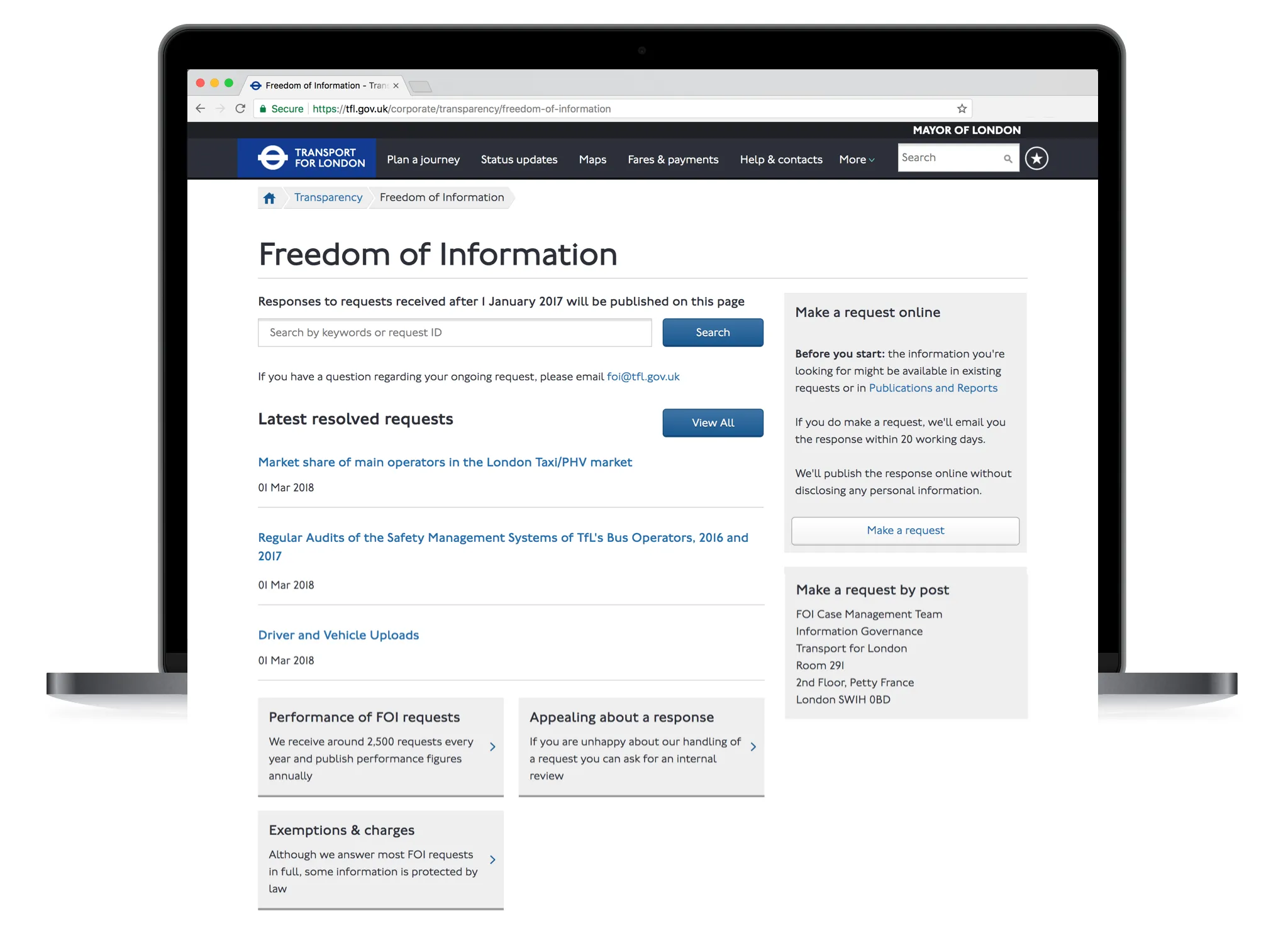
Context
What is TfL Freedom of Information?
TfL Freedom of Information is the place where the general public can submit FOI requests and uncover existing FOI answers relating to anything TfL.
Why was there a need for a digital product?
TfL FOI requests have been steadily increasing over the years. The old way of managing and processing FOI wasn’t effective.
A digital product was defined as a solution to tackle this issue, to provide a better user experience, and to provide a better experience for the TfL FOI staff.
Discovery
We started the project from nothing. The Freedom of Information Act, potential user needs and organisation objectives was alien to my colleague and I.
Observing and shadowing
We immersed ourselves in the world of TfL FOI, observing and shadowing FOI Case Officers, user interactions and day to day processes.
Stakeholder workshops
We also held three workshops with stakeholders. In which we got hands on with them discovering issues with the existing product and service.
“I moderated co-design workshops with stakeholders to uncover insight and align on direction.”
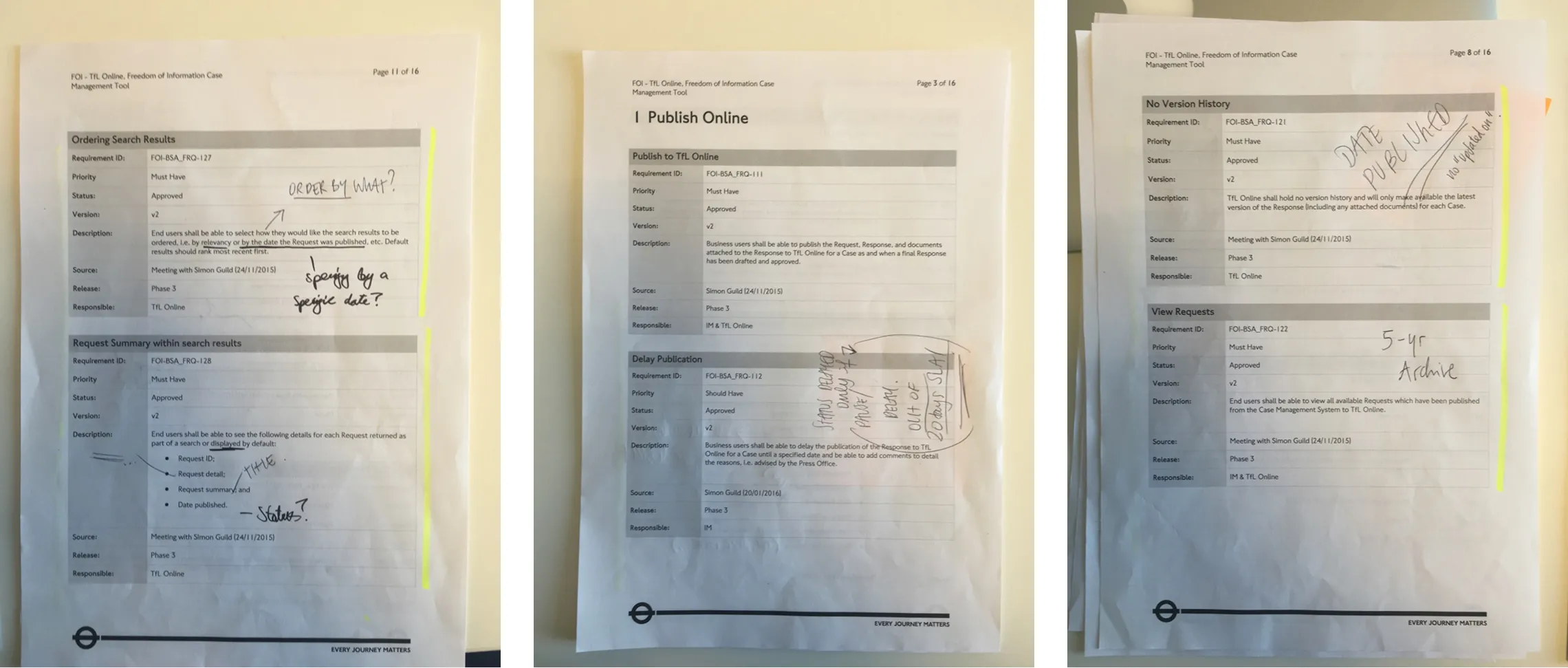
Depth interviews
To complement the observation, I led depth interviews with FOI Case Officers and the Product Owners.
Unearthing the organisations needs and objectives, getting their thoughts on the vision of the product, and how they saw the product working from a users point of view.
Landscape review
During the Discovery phase I also completed a review of similar products and services.
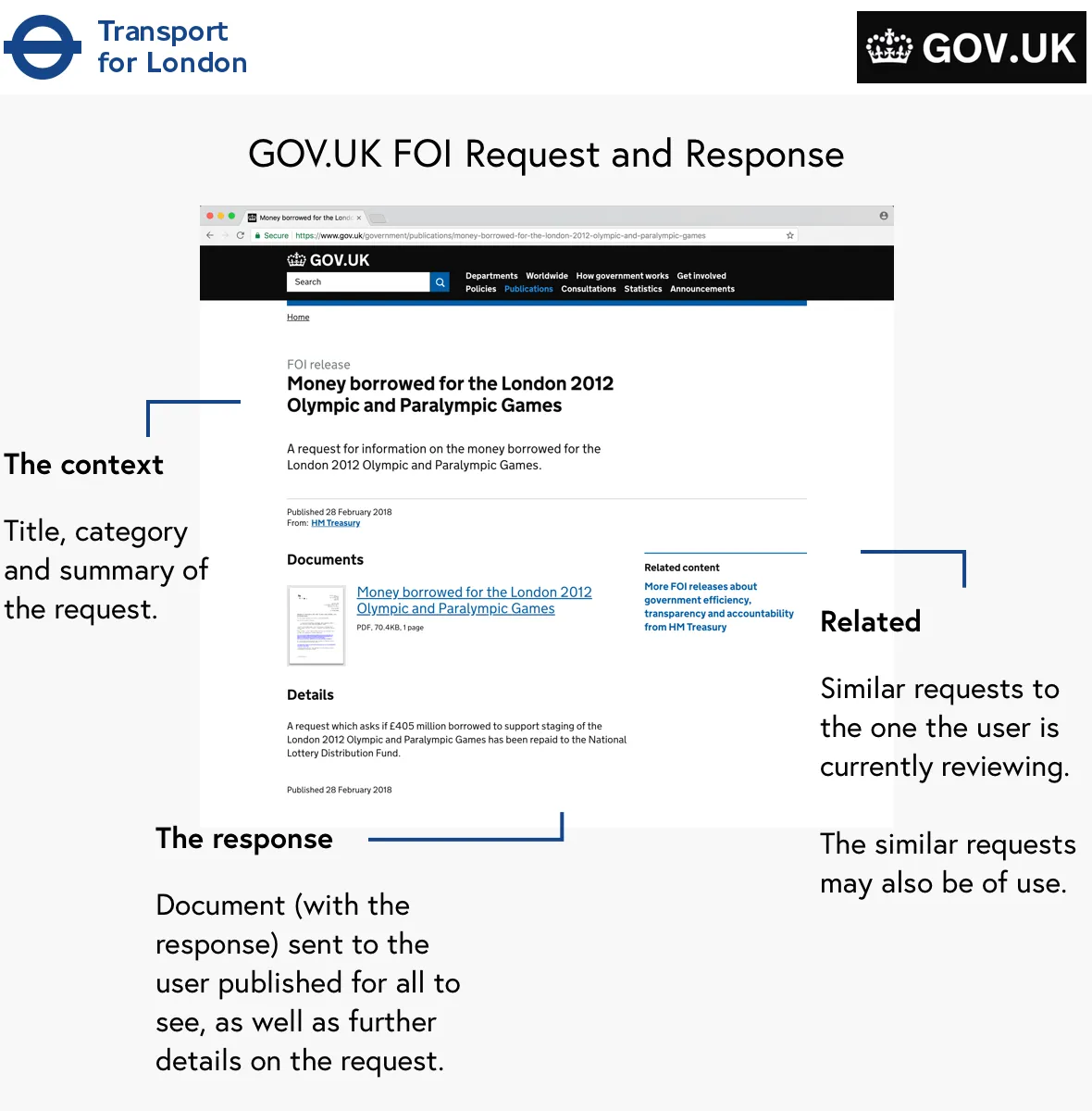
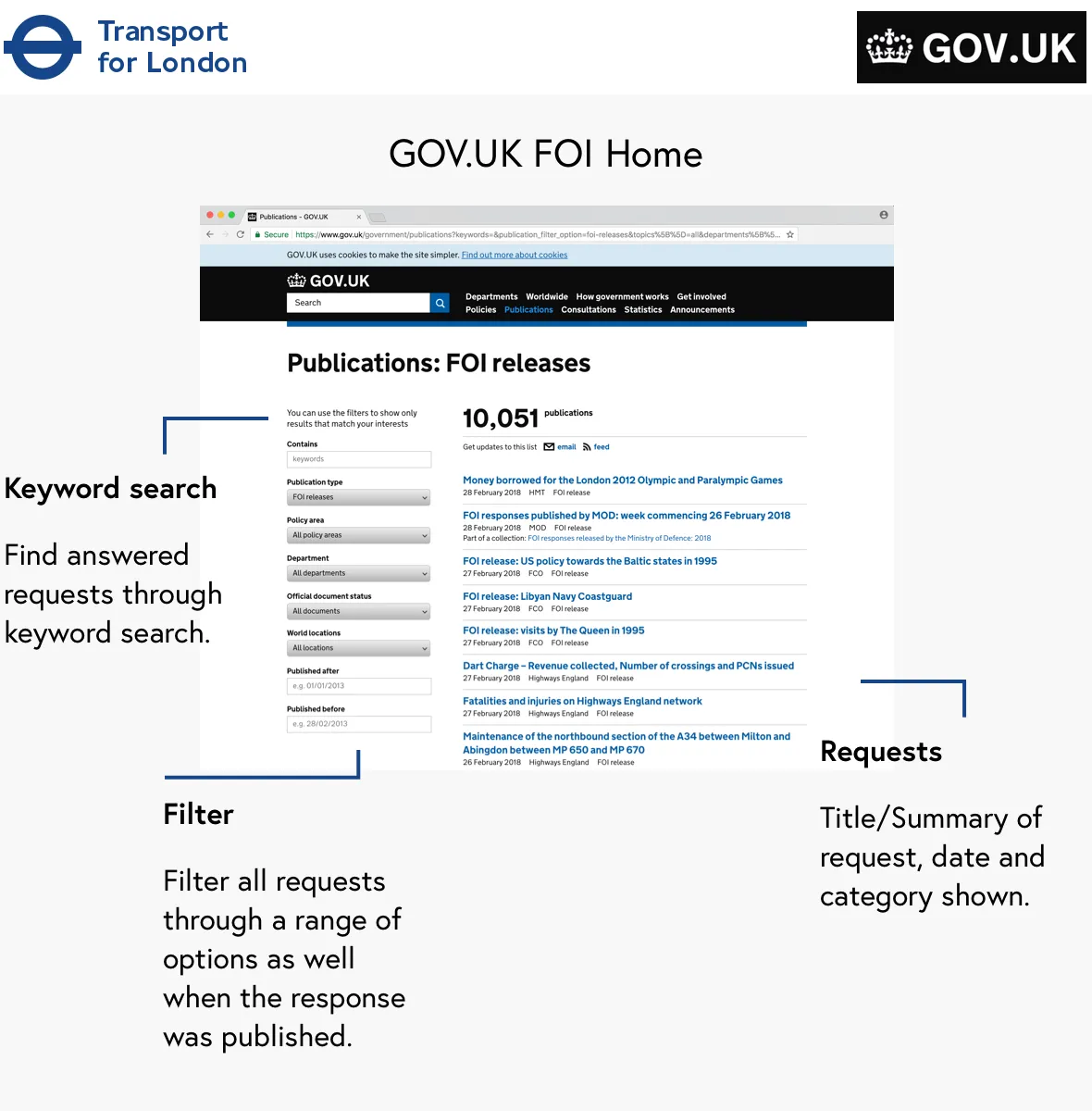
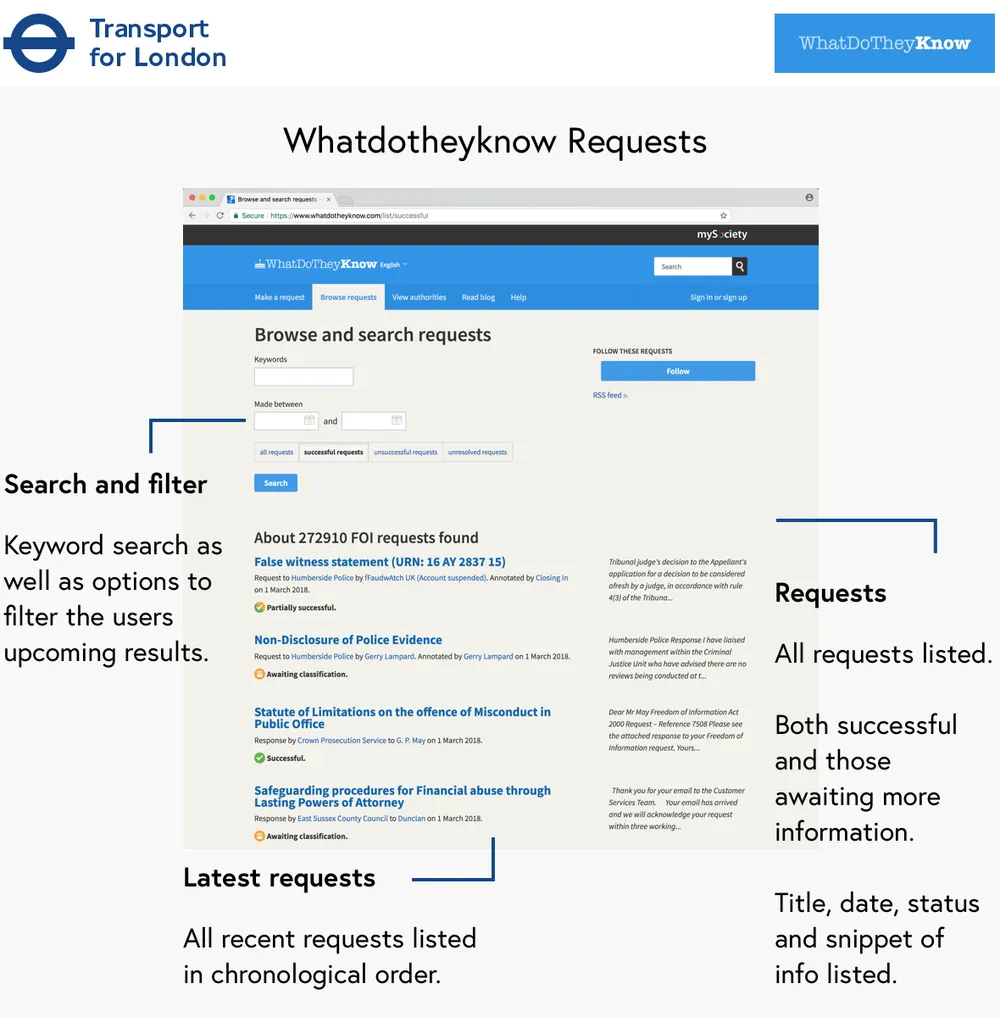
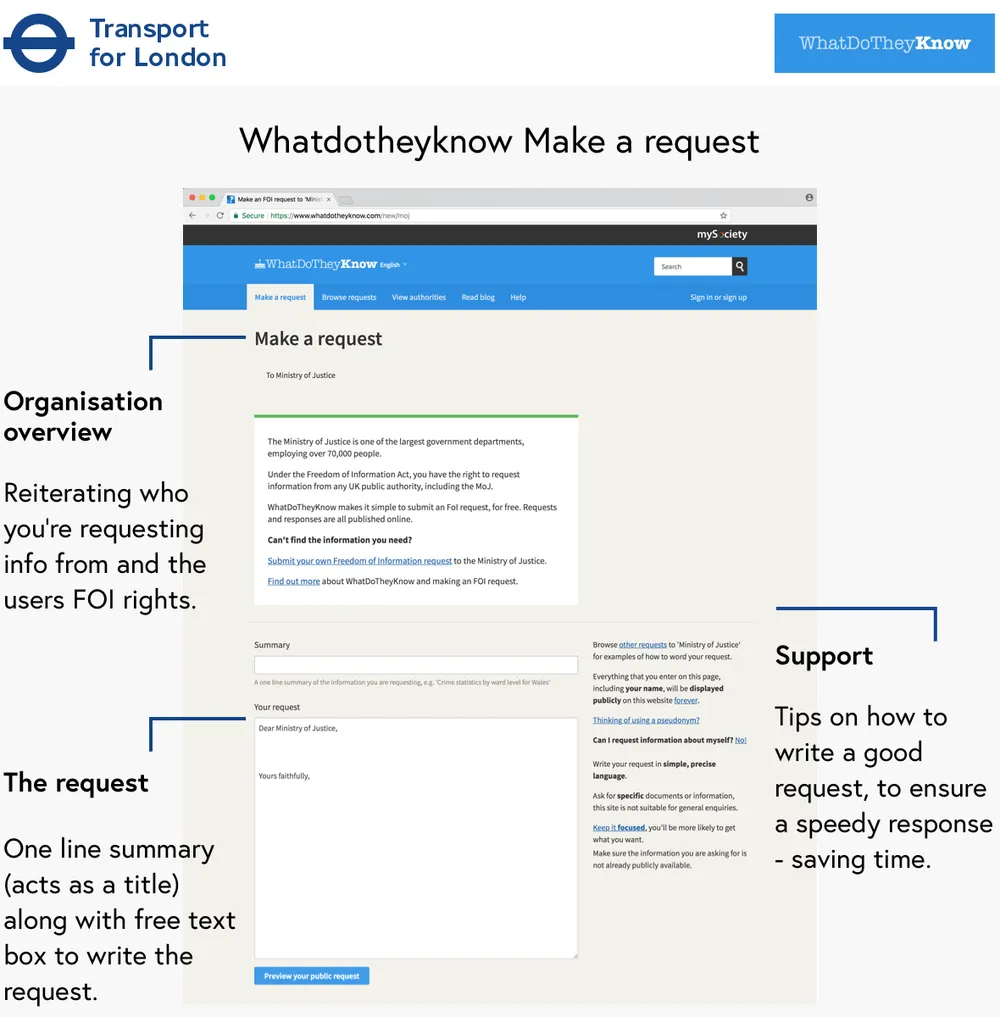
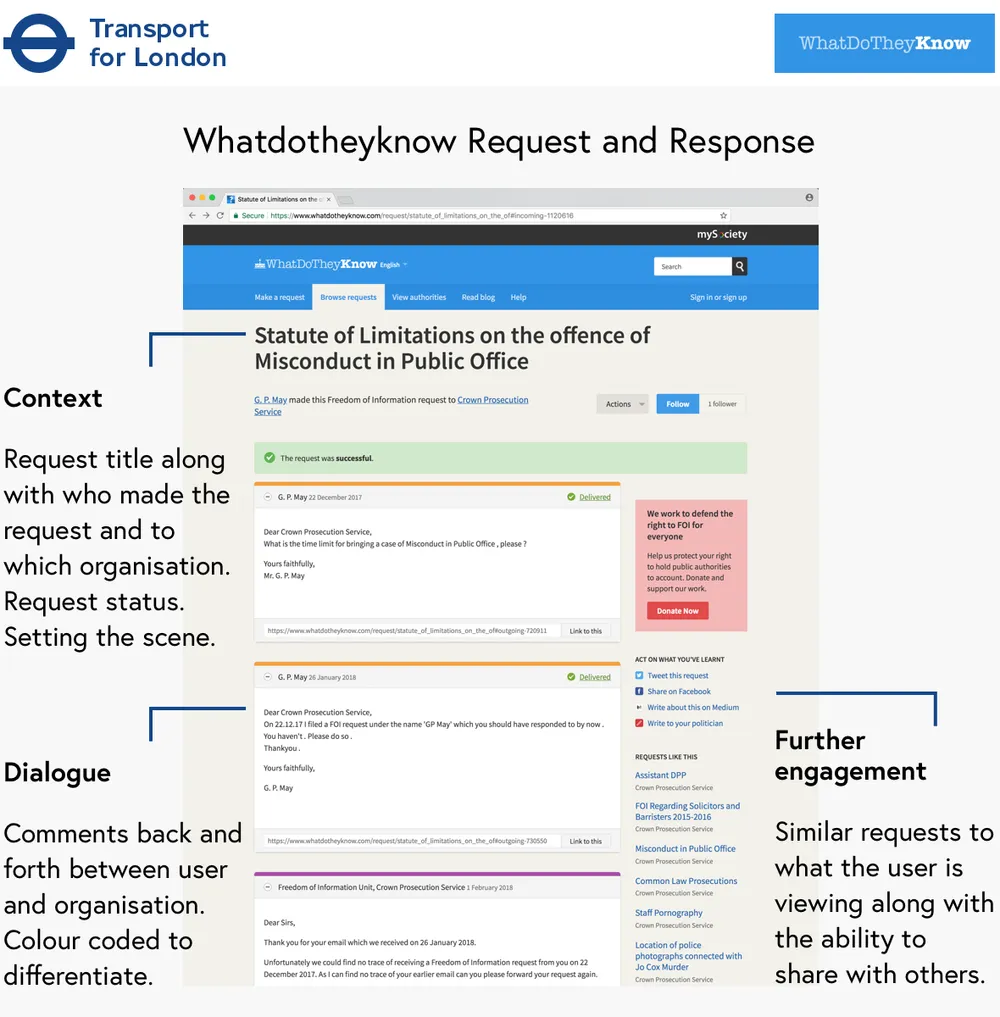
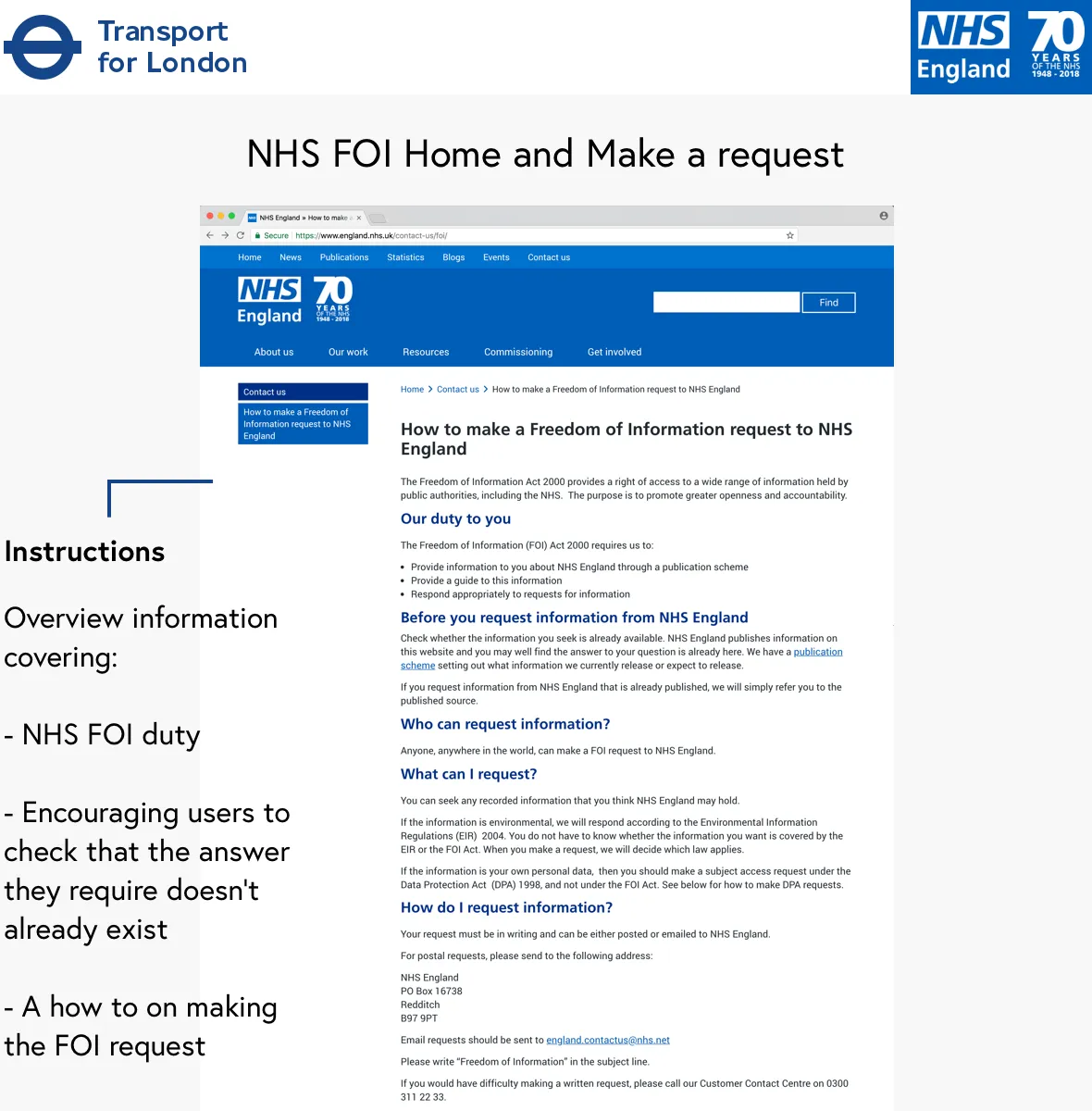
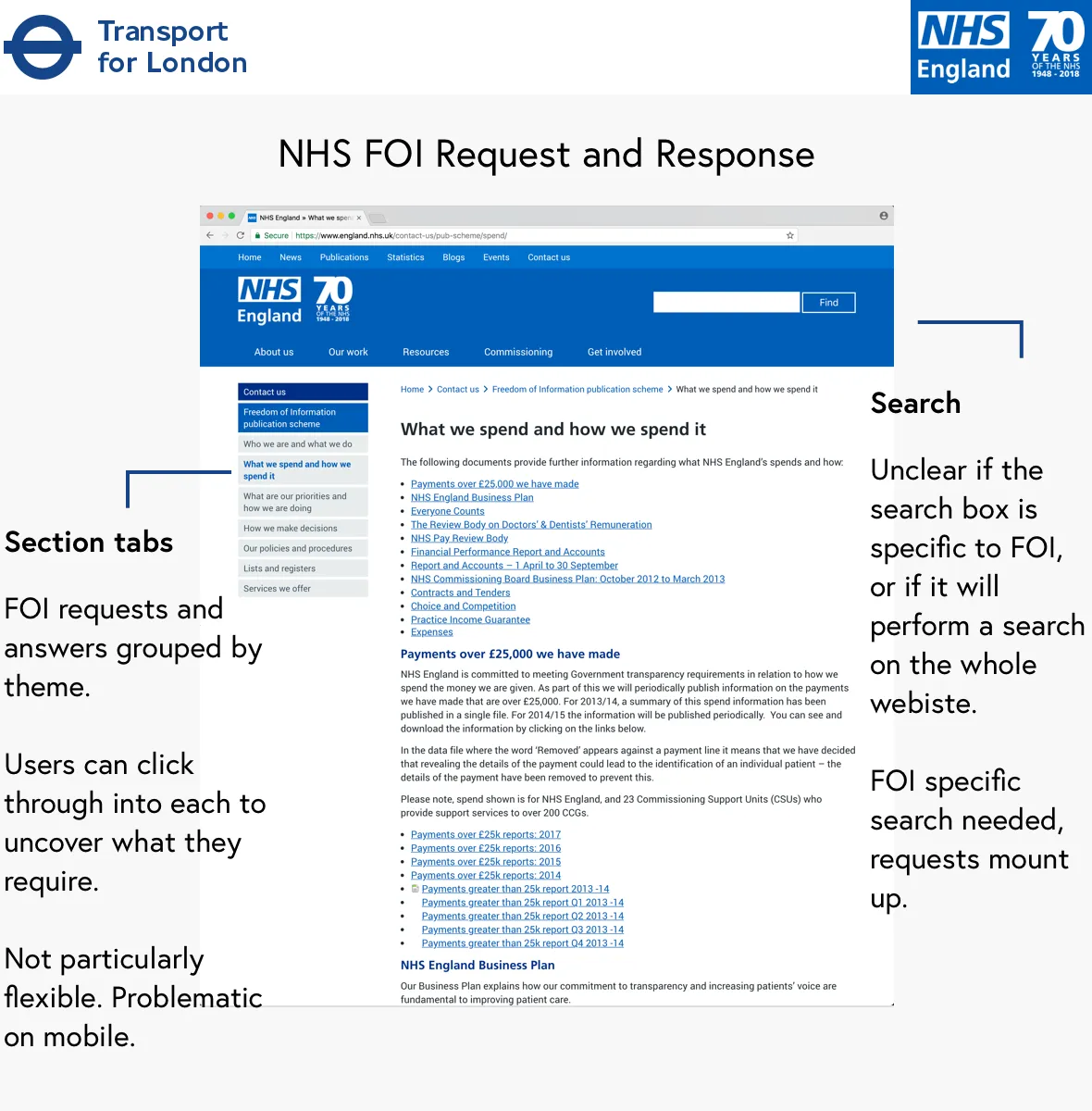
“The competitor review proved to be a great source of inspiration throughout the project.”
Ideation
Mapping user journeys
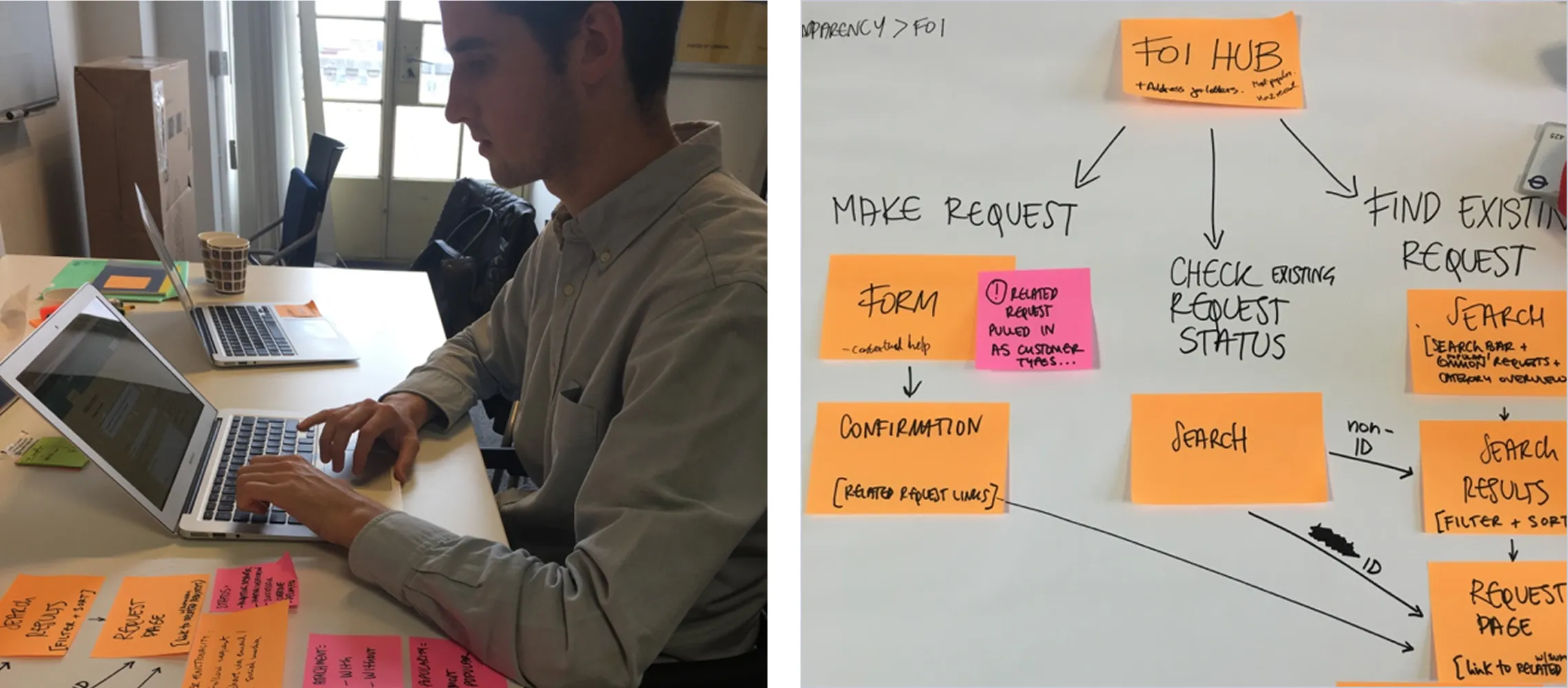
We were aware of key user journeys that the product would have to support, these were uncovered during the Discovery phase.
They were:
- Making an FOI request
- Finding existing FOI requests and responses
- Reviewing answered requests and acting upon them
With the insight and inspiration gathered we started to map out the user journeys. We did so using post-its so we could move at speed and try new ideas to streamline the journey.
Designing the experience
With approval on the user journeys we began creating the designs and interactions for each stage of the journey.
Sketching on paper, whiteboards and creating page elements using post-it notes that we could move around and create new pages with.
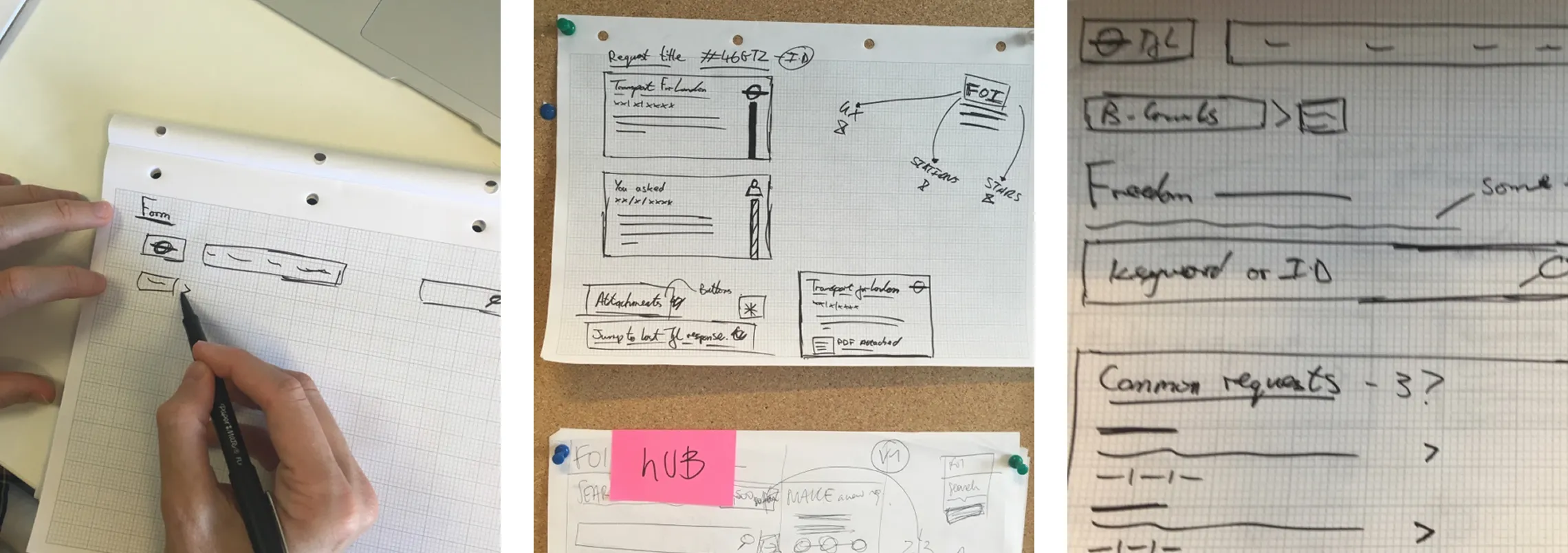
“The fidelity of the design grew as the direction and flow was validated.”
Prototype, test, iterate
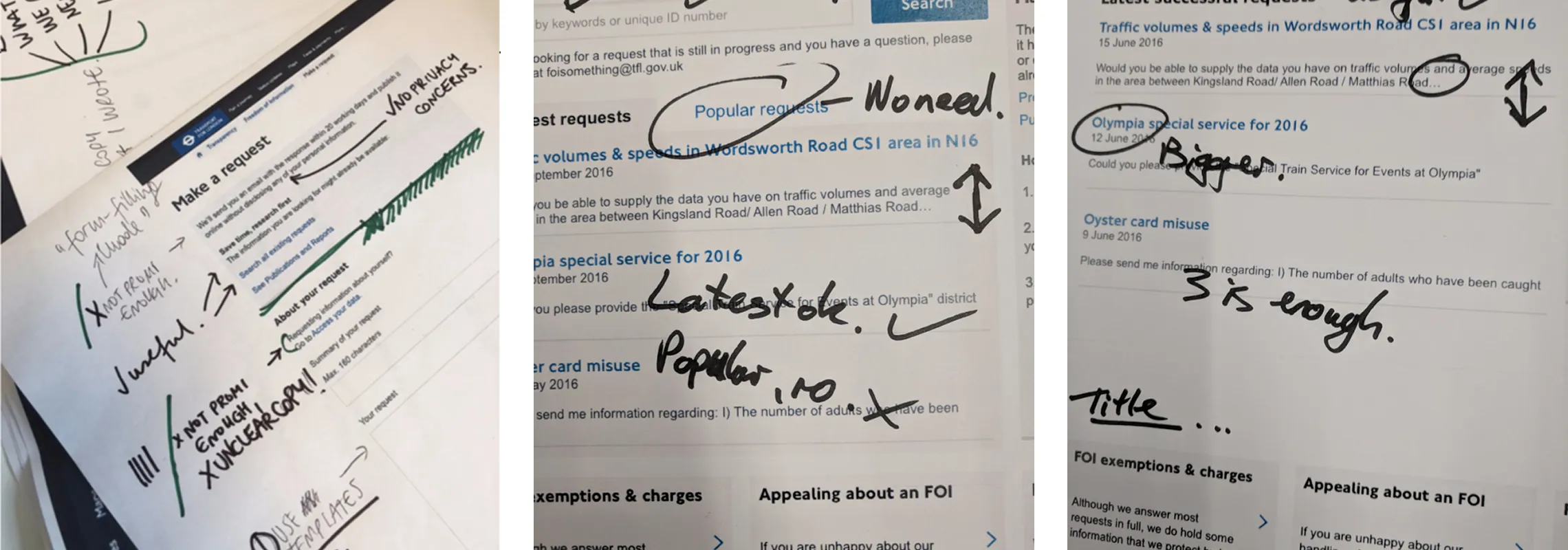
After a thorough week of designing and iterating our design efforts internally, we were in a good position to test the prototype with users.
I led an intense week of prototyping and iterating following feedback from the user testing sessions my colleague and I moderated.
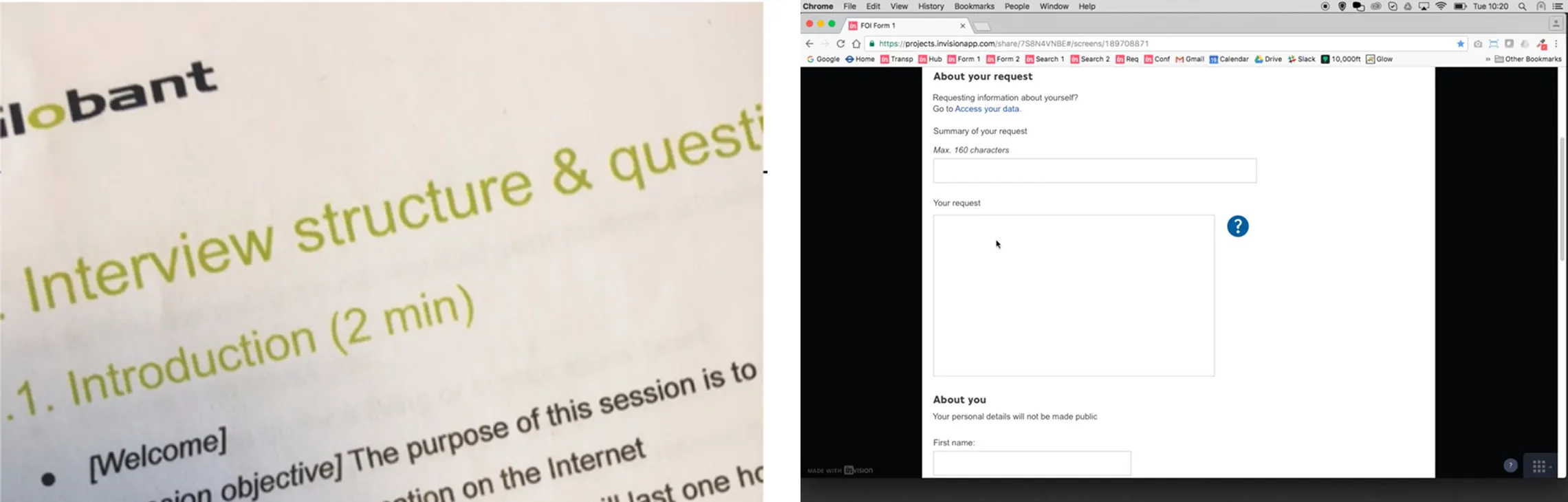
“I led an intense week of prototyping, user testing and iterating.”
We ensured that the TfL Engineering Team who were going to be building the product observed the sessions.
I also brought along the Product Owners and some TfL FOI Case Officers, just for them to see first hand what users experience.
“After the second round of user testing and iterating we took the prototype out onto the streets for Guerrilla Testing.”
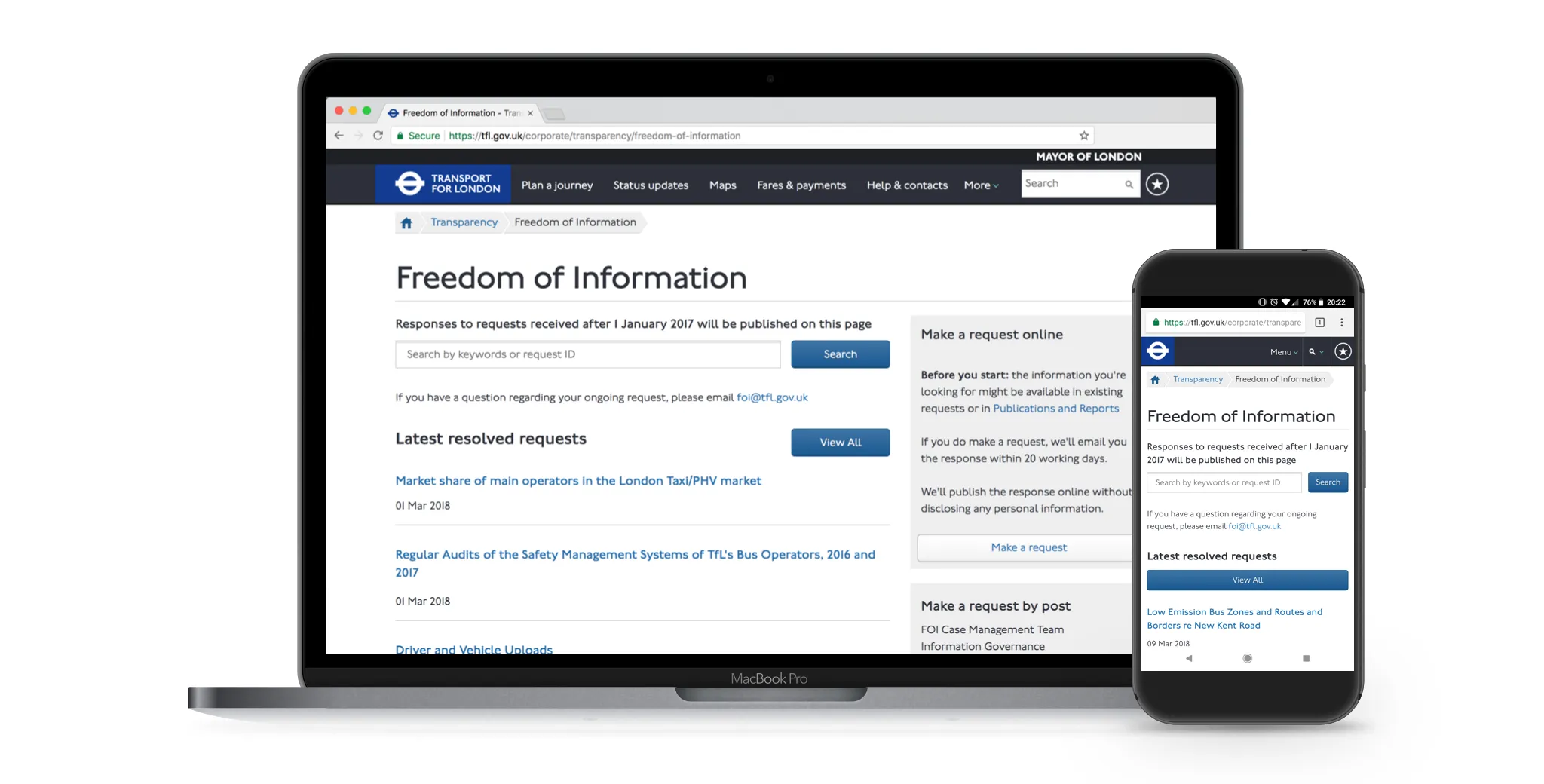
Transport for London Freedom of Information
The user can jump into a range of journeys to get to the outcome they require. Search and review latest requests given prominence to encourage users to look for their answer, before requesting.
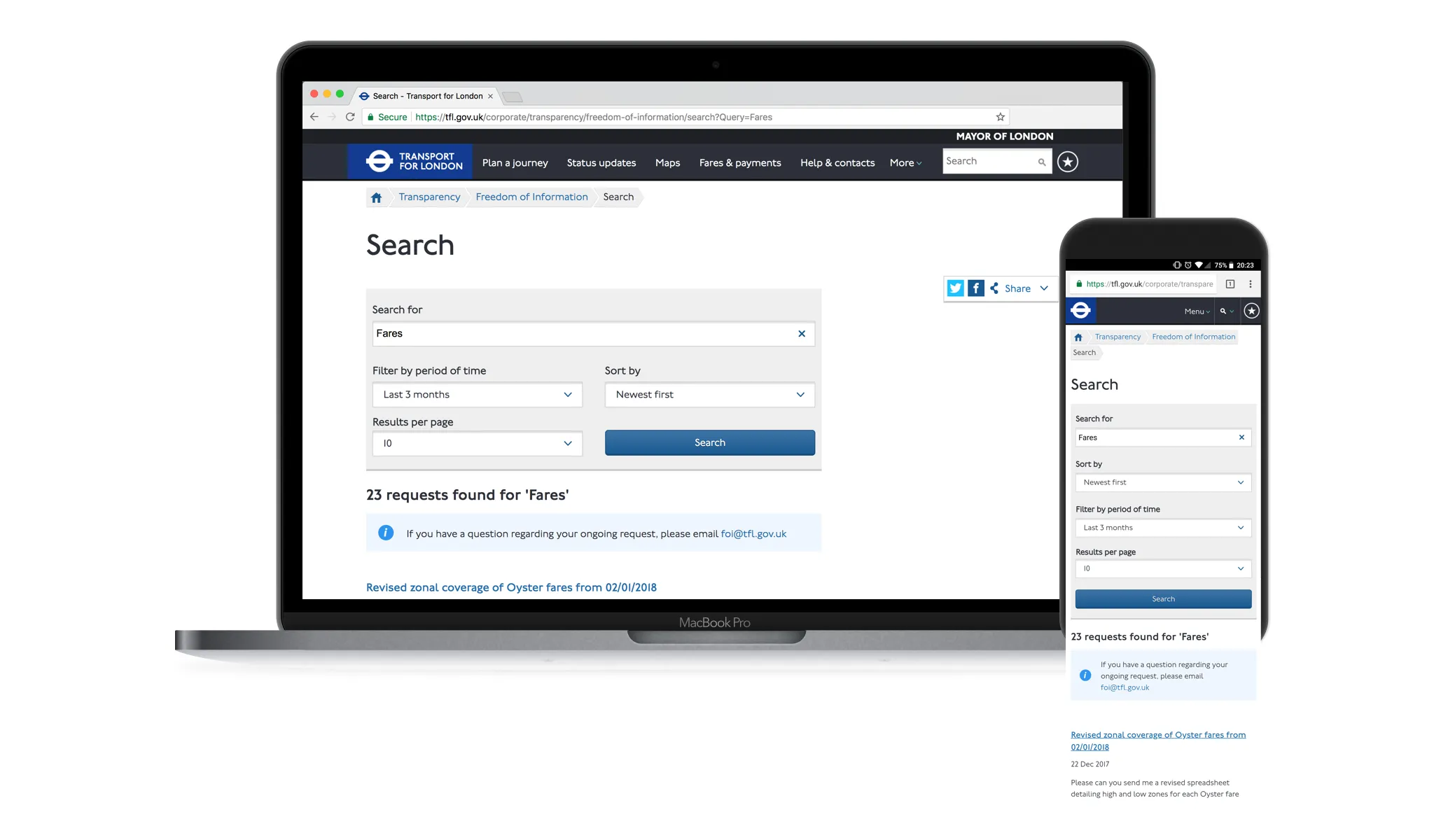
Search
Search the entire TfL Freedom of Information database of requests and responses, sort and filter enables the user to find what they need quickly.
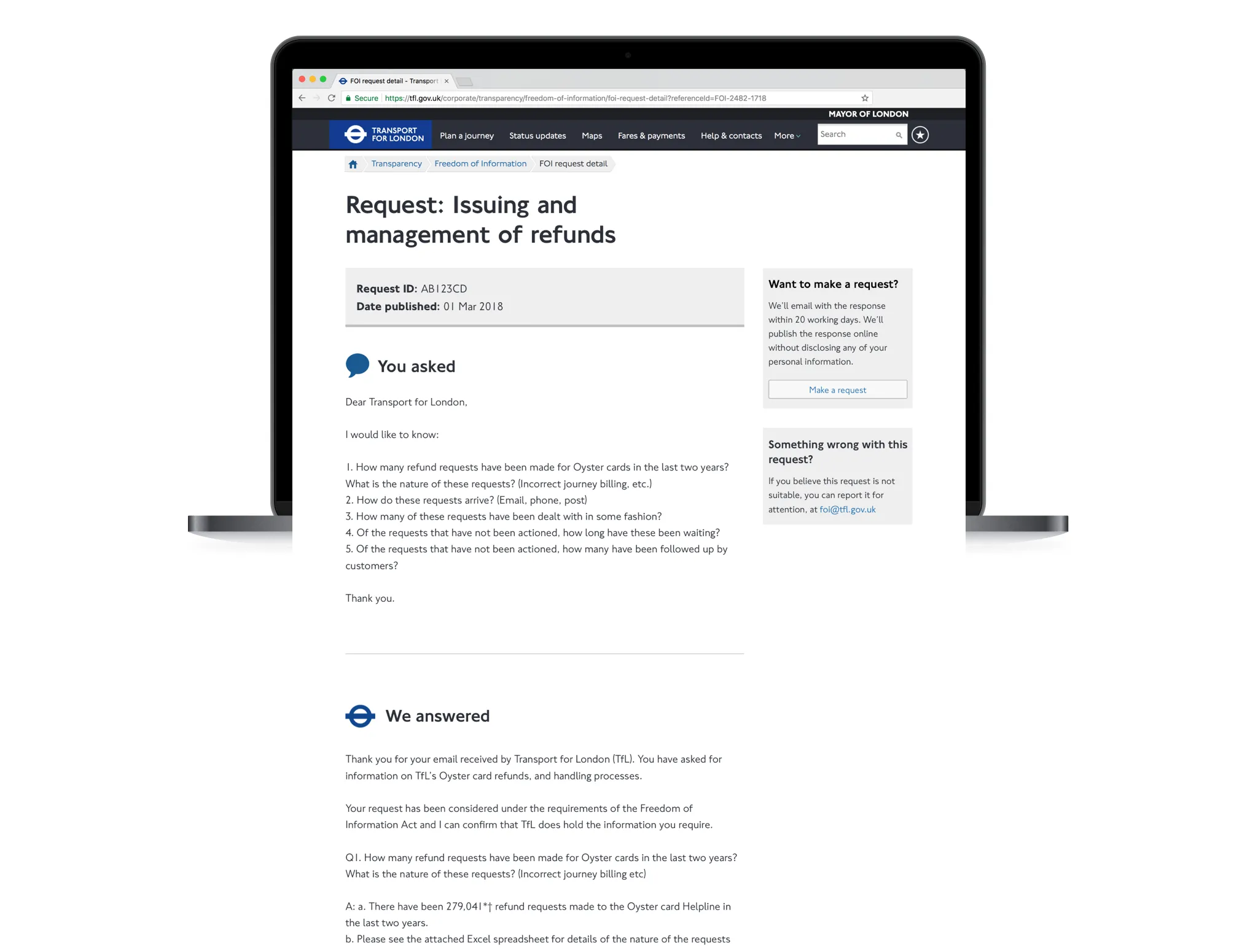
Request and response
Users can review the full request submitted by others, and the response from Transport for London.
Impact
A service that serves the needs of citizens in getting the information they require.
Resulting in:
- 14% drop in the time it takes to respond to a freedom of information request
- 18% fewer freedom of information requests made. The information users require already exists, now they can find it
- 32% drop in the time it takes to submit a freedom of information request