Transport for London
Motivating children to travel to school actively
The challenge
Redesign a broken Transport for London product that is supposed to encourage and motivate London school children to travel to school actively.
Impact
Societal change. The redesigned product brought schools back to the program.
Schools across London adopted the program and continue to use it to this day to encourage active travel amongst their pupils.
Schools are letting pupils use it to plan and document, therefore freeing up teacher time.
Restored trust in the program and Transport for London.
My role
Alongside another designer I was:
- Interviewing
- Observing
- Workshopping
- Designing
- Prototyping
- Iterating
- Presenting
- Persuading
- Shipping
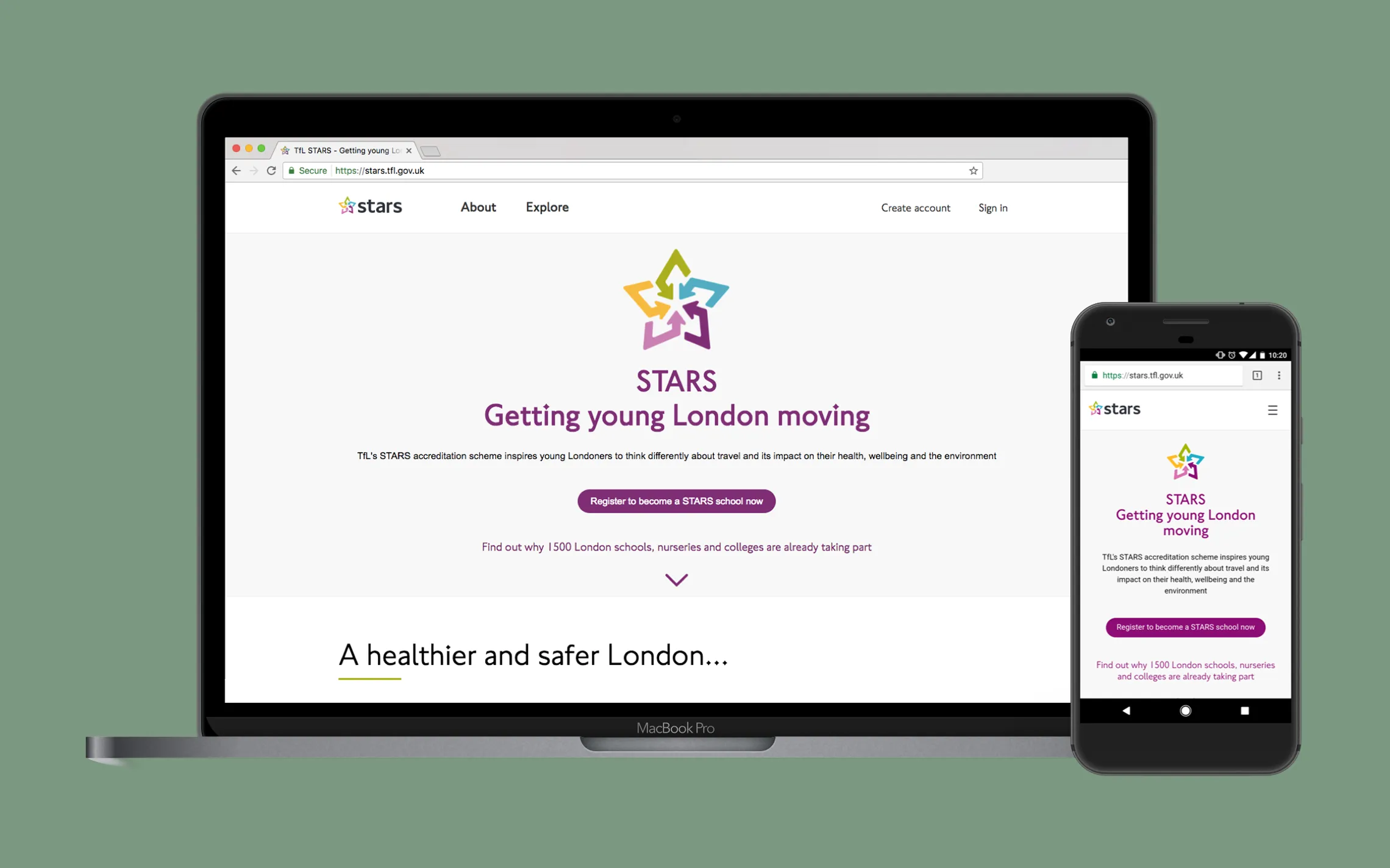
“32% of traffic in London between 8am - 9am is caused by the school run.”
The context
STARS (Sustainable Travel: Active, Responsible, Safe) is a scheme run by Transport for London (TfL) that aims to encourage pupils in London to travel to school actively.
Given 32% of traffic in London between 8am - 9am is caused by the school run, getting an initiative like this working well is in TfL’s best interests and their ongoing mission to reduce congestion in the capital.
However, the current digital and service experience is very poor. It’s outdated, frustrating and taking up too much time from school teachers and Borough Officers.
“In its current state, STARS is simply unsustainable for TfL.”
What’s the problem?
We spent a month discovering the current state of STARS and the problems to be solved.
Meeting with schools and Borough Officers and uncovering a range of issues. From not being able to update and share content with other schools, to the system being overly complex for school teachers to use.
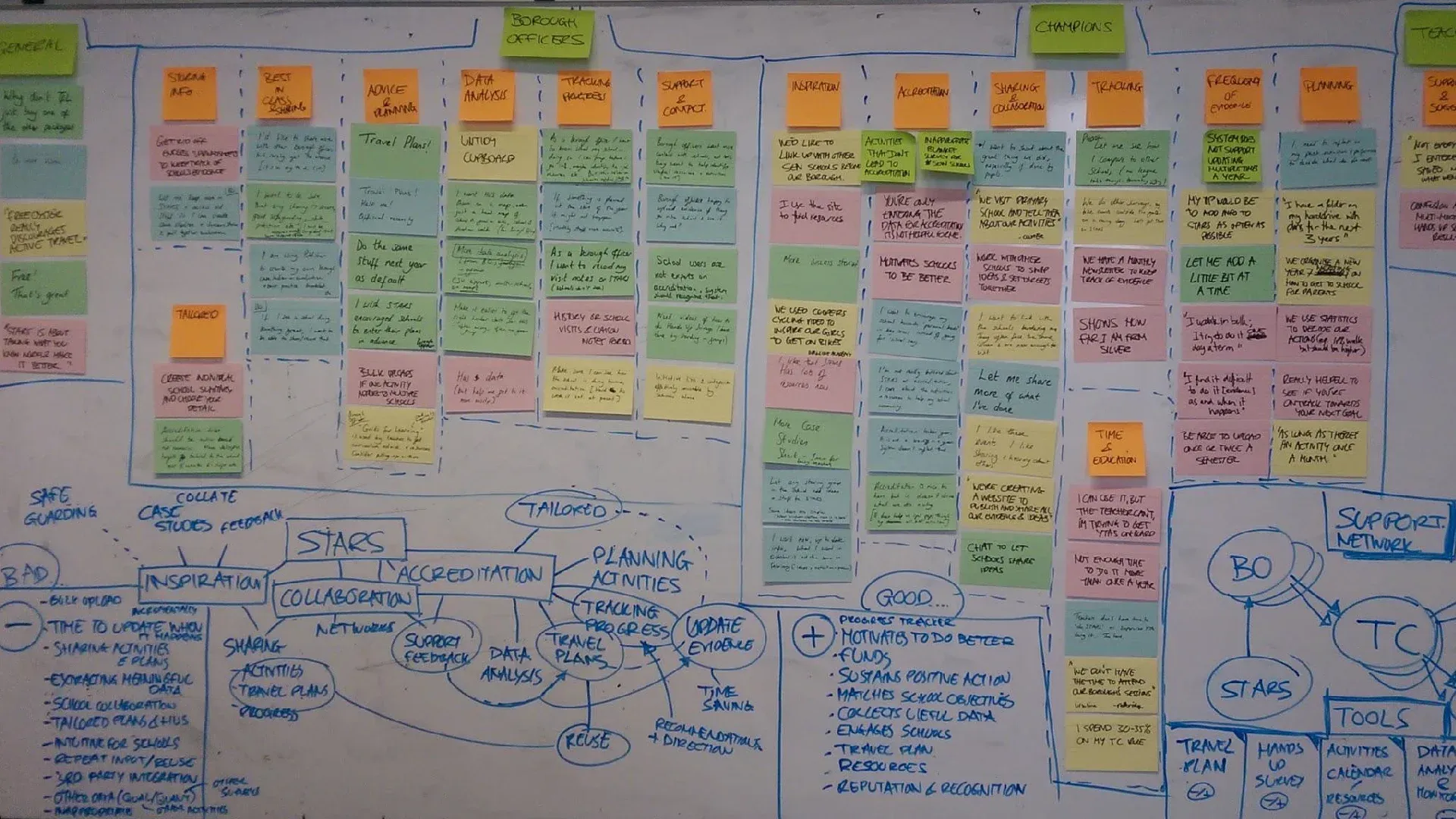
Setting the vision
My colleague and I had discovered a ton of insight and we were now in a position to begin to synthesise it and set a clear direction and vision for where we wanted to take STARS.
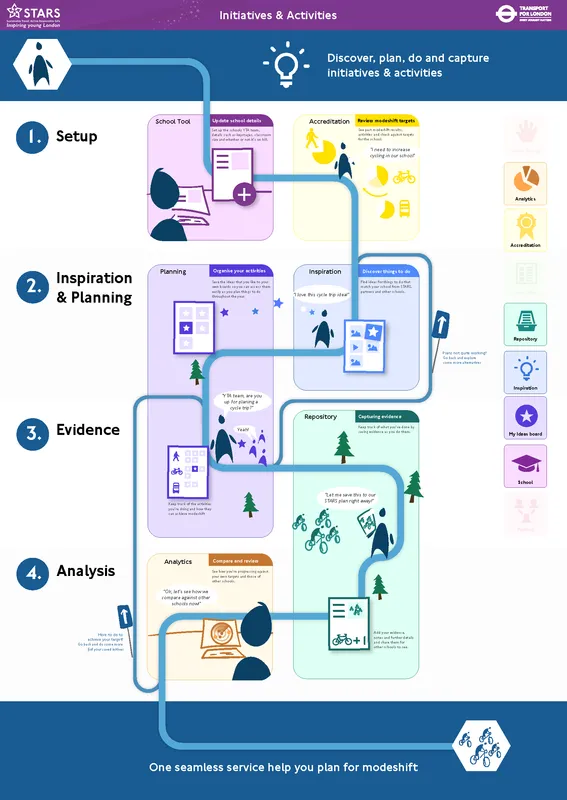
To do so we created three future journeys that encompassed the main STARS tasks that schools do.
“We needed to get our stakeholders behind the vision for where we wanted to take STARS.”
Future journeys
1. Initiatives & Activities
Schools will get inspired and find activities to do that will encourage modeshift. Simple documenting of evidence and comparing the activity the user did to other schools.
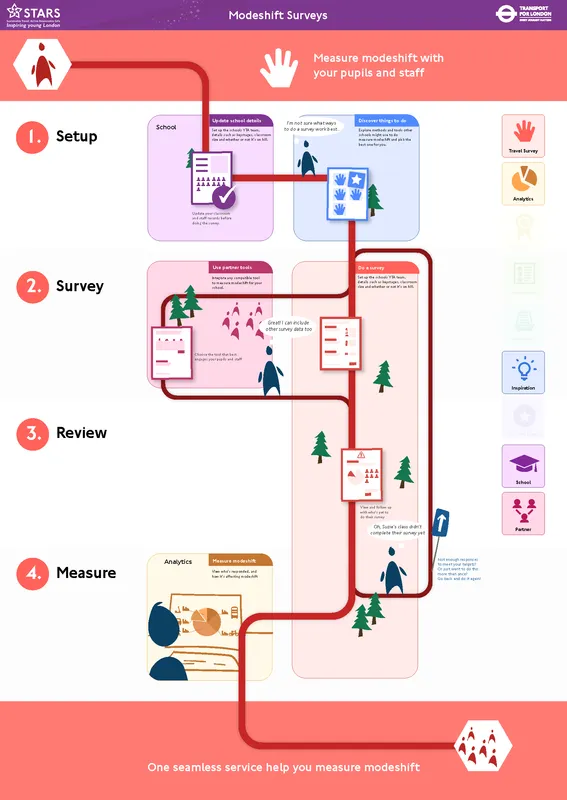
2. Modeshift surveys
Individual classes complete their own modeshift surveys and upload the results. This takes the burden off the one teacher responsible for STARS.
3. Travel Plans
Ability to tailor what goes into a travel plan so it best reflects the school. A polished well formatted document is the output that schools can use.
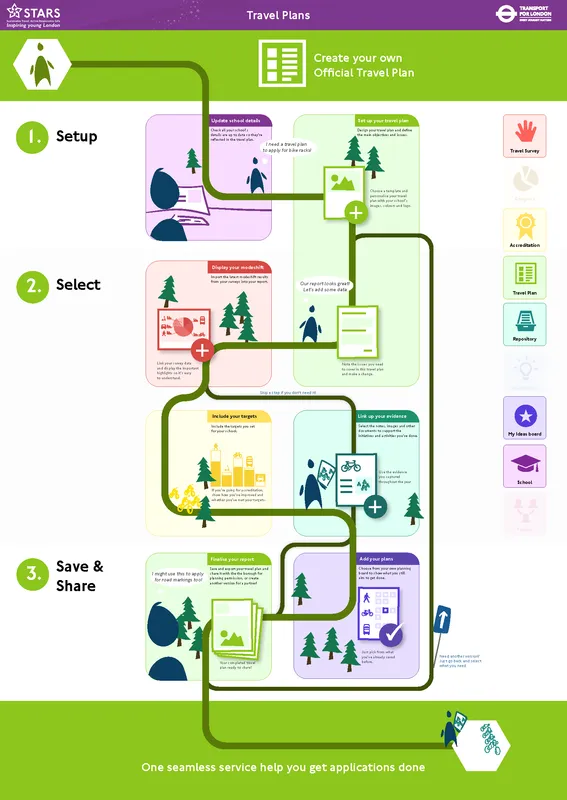
“The future journeys made the insight tangible, our stakeholders could see the direction, and they were all for it.”
Mobilisation phase
Equipped with the materials above we began a 5 week mobilisation phase.
Meeting schools
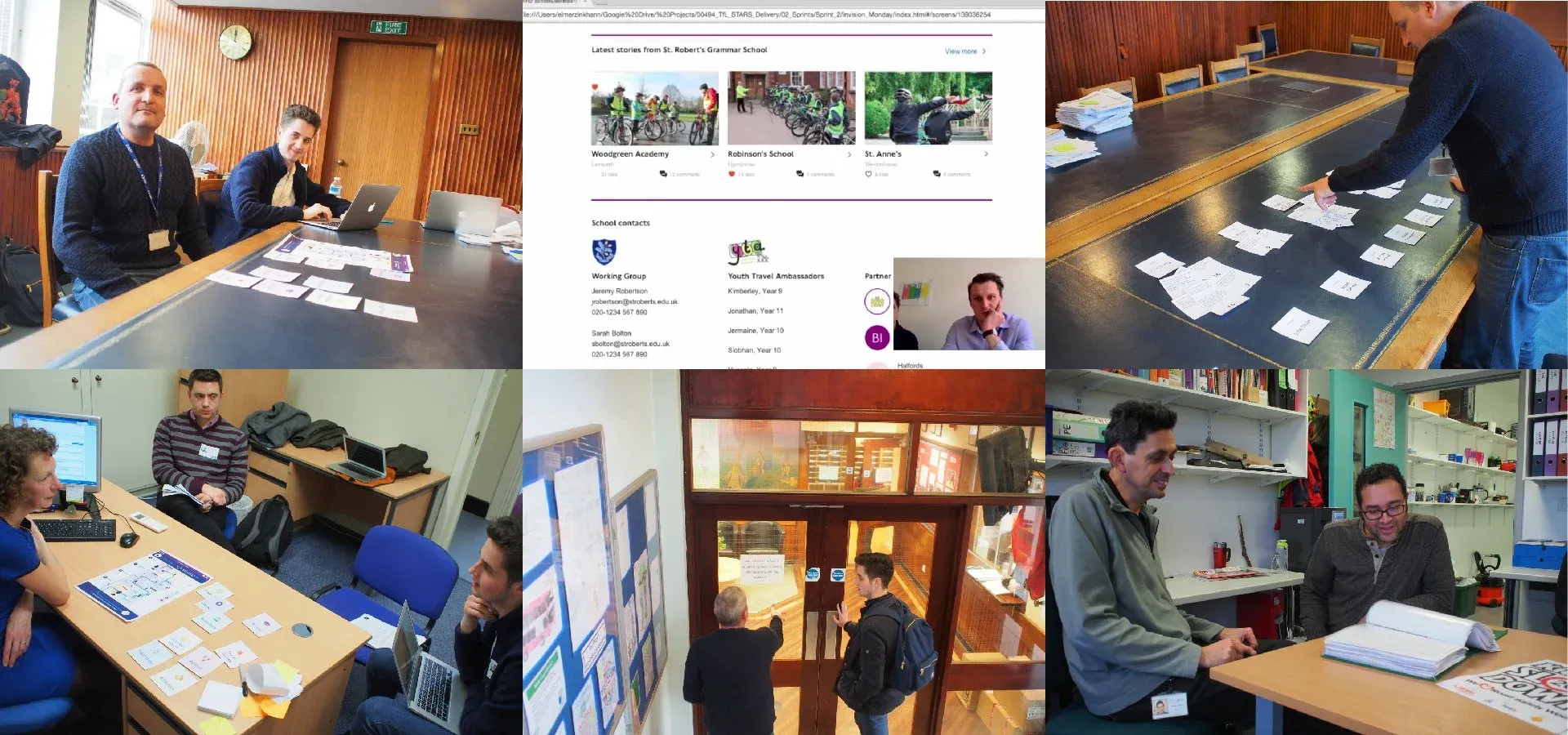
Over the course of the five weeks my colleague and I met with schools, covering the different types of school that would use STARS.
Meeting Borough Officers
In parallel to meeting with schools we also met with Borough Officers. Borough Officers look after all of the schools in the London borough that they represent.
We conducted three co-discovery and co-design workshops with Borough Officers representing different London boroughs.
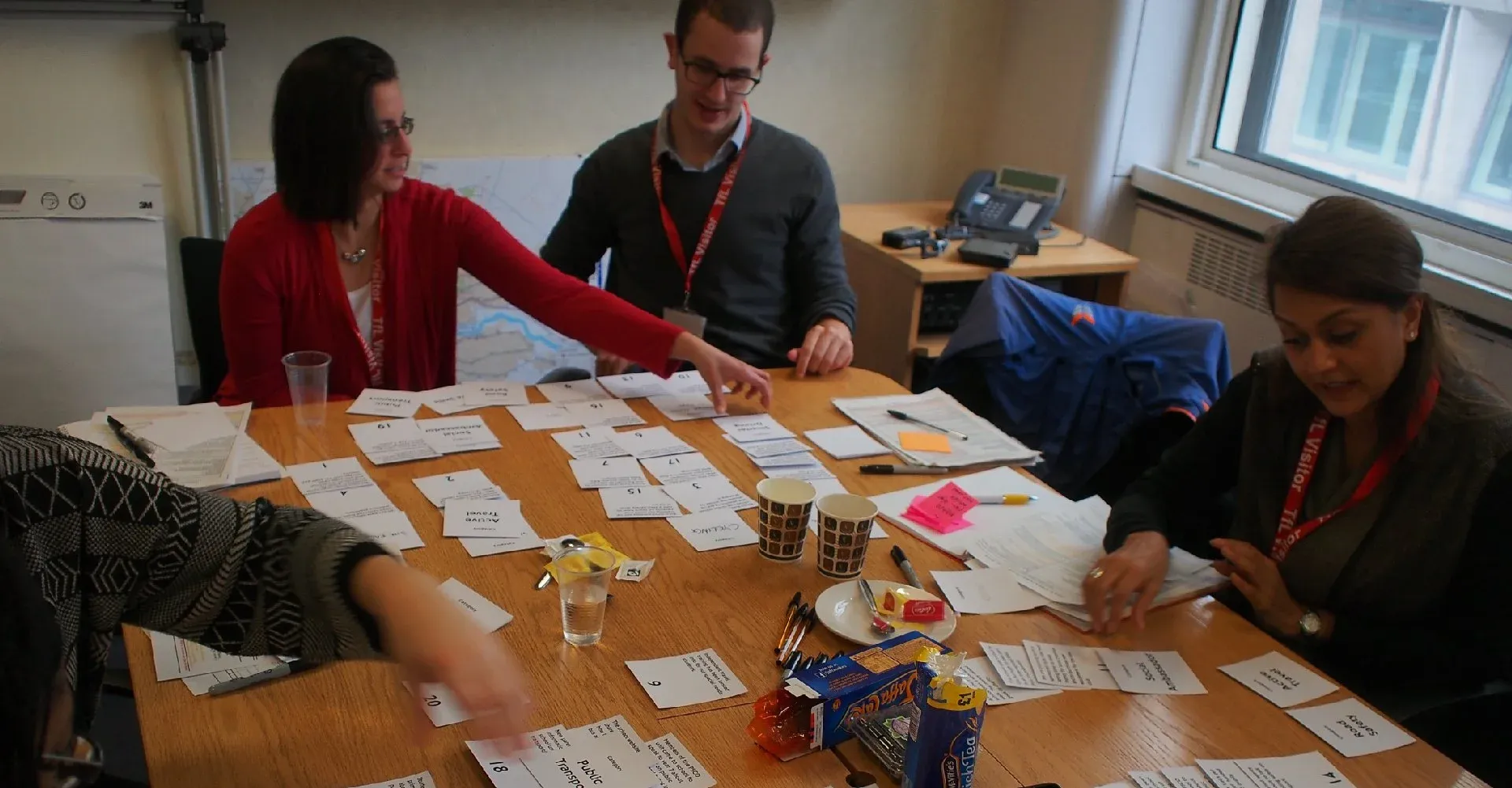
“After finishing one testing session with a school I was iterating the prototype on the tube on the way to the next session.”
Build sprints
With the Mobilisation phase complete and the team assembled we began product development sprints.
I was part of a large multidisciplinary agile team working in 2 week sprints. As a team we were delivering a new part of the product quickly and often.
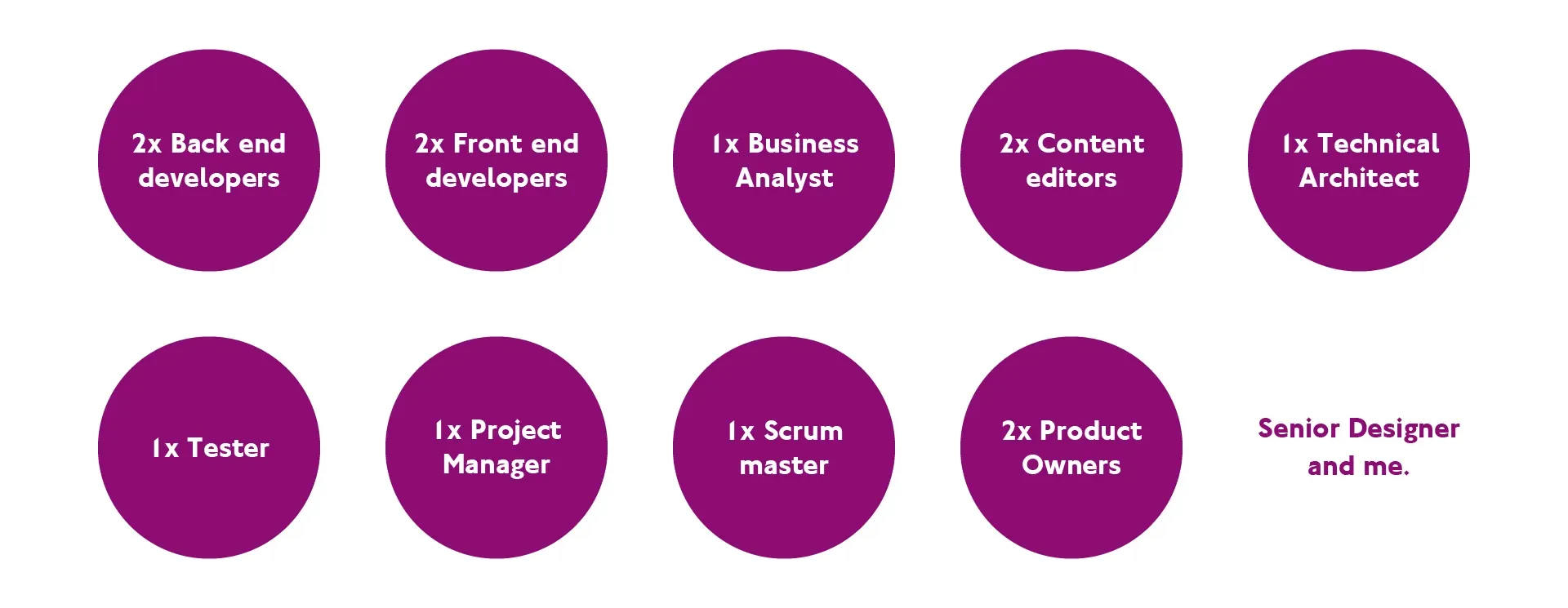
We were under the supervision of an experienced Scrum Master who followed agile methodologies strictly.
Before each sprint we would all do sprint planning as a team together. Story pointing how much development effort would be needed using the Fibonacci Sequence.
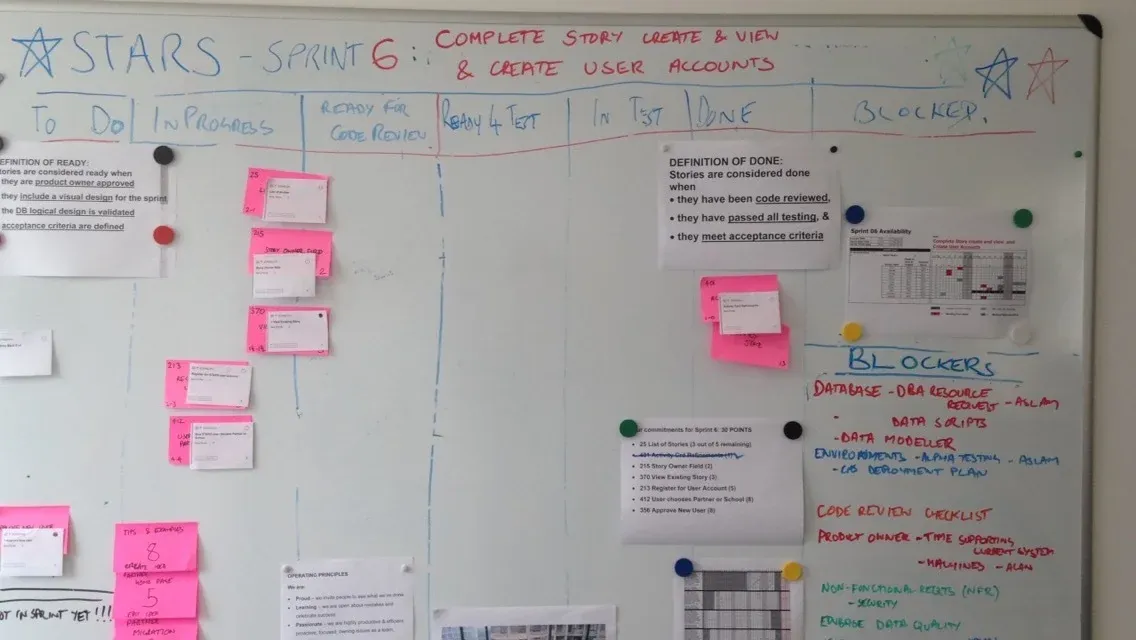
Sprint style
My colleague and I ran one sprint ahead of the Engineers. By being one sprint ahead we always had new functionality to handover.
Working in an agile and iterative fashion there was no documentation. We would check in with the back and front end development leads during our sprint to ensure feasibility.
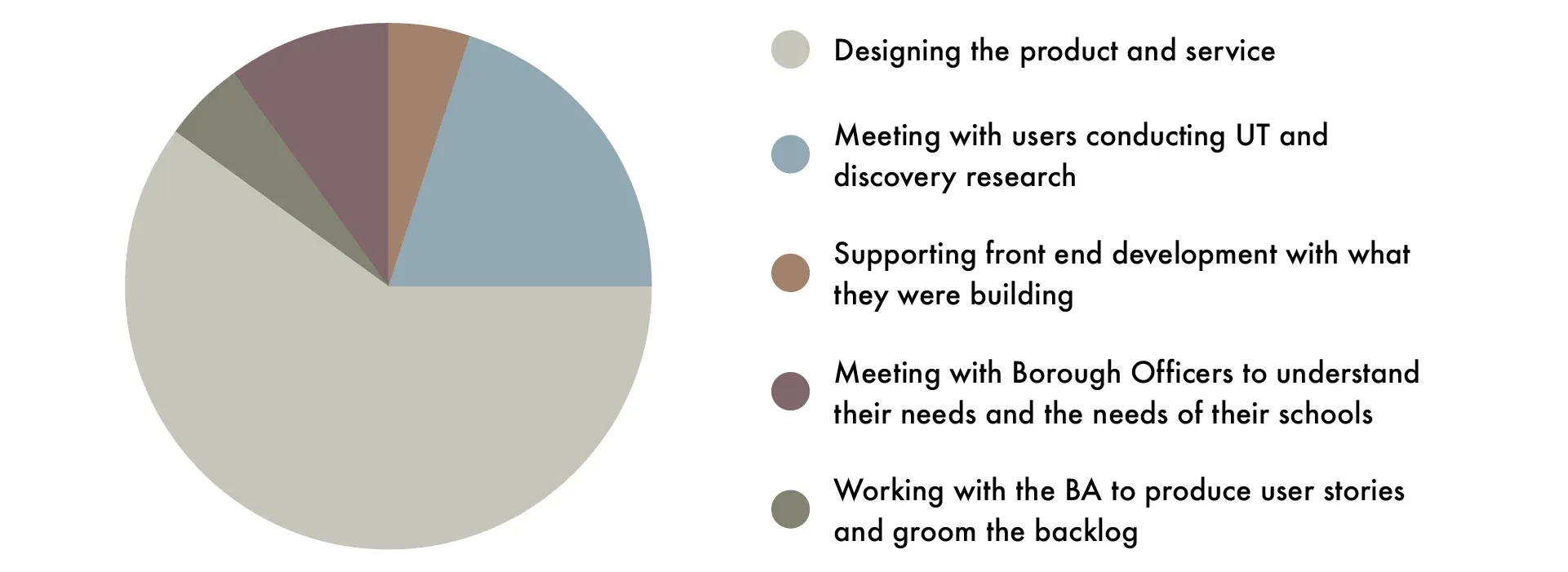
“Time with our users was split 50/50 - testing what we had designed in the current sprint, and discovering new insights to inform the next.”
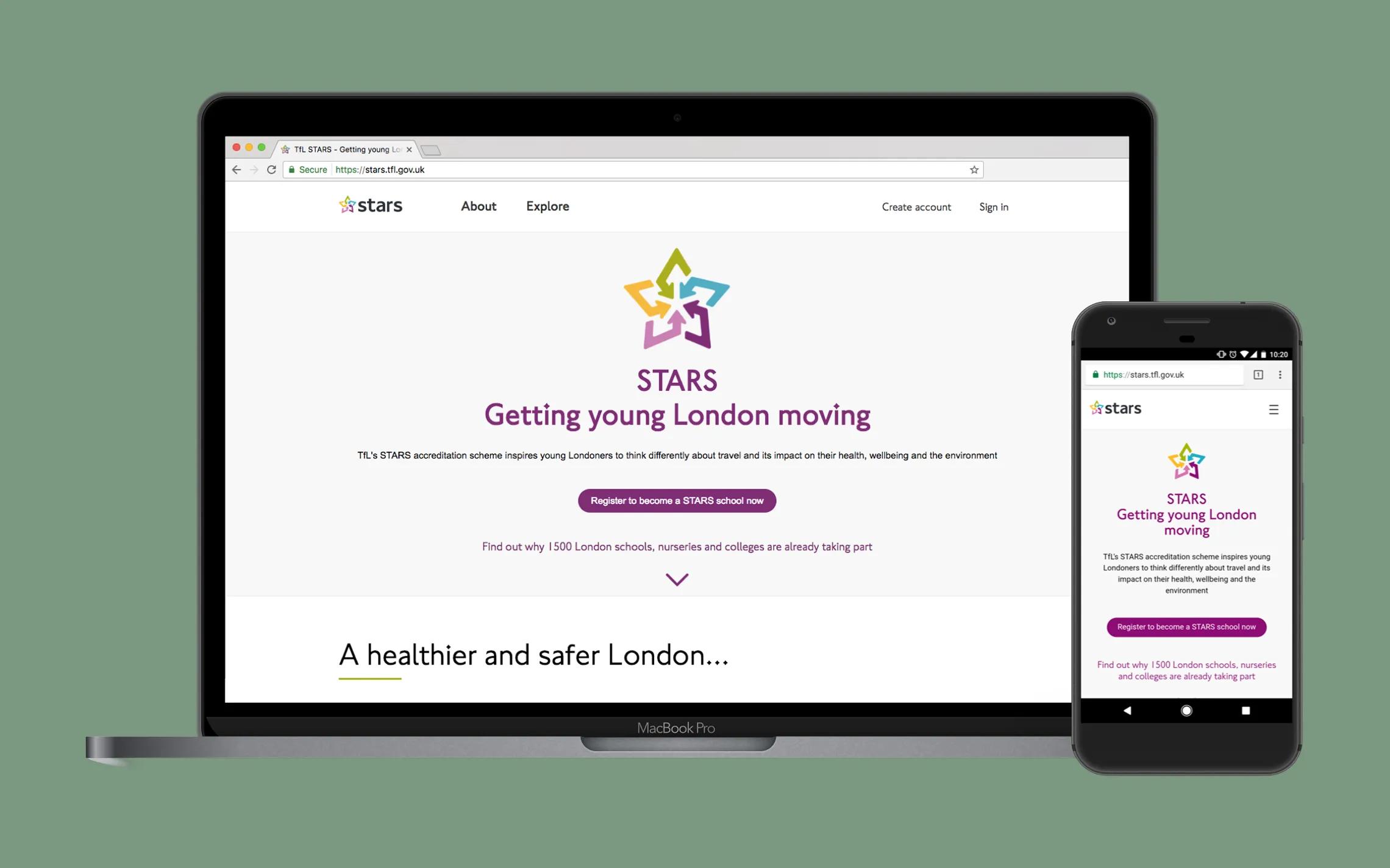
Introducing STARS
TfL STARS inspires London pupils to think differently about travel and its impact on their health, wellbeing and the environment.
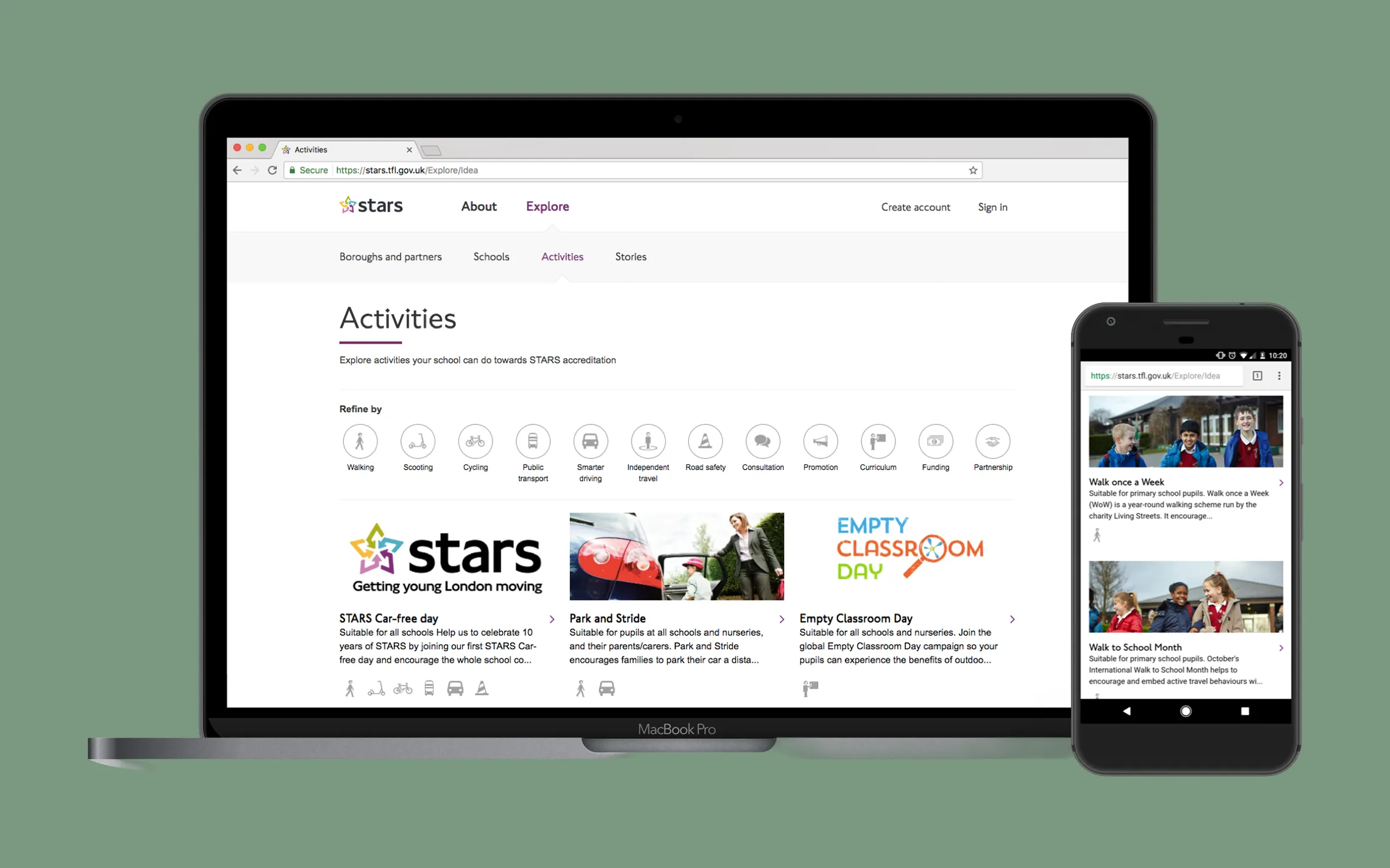
Get inspired
Schools can now find a range of activities to complete that will encourage active travel. They have the option of filtering by areas of focus should they wish to hone in on a particular type.
Compare against other schools
Schools can view how other schools are getting on and how they’ve got to their accreditation level.
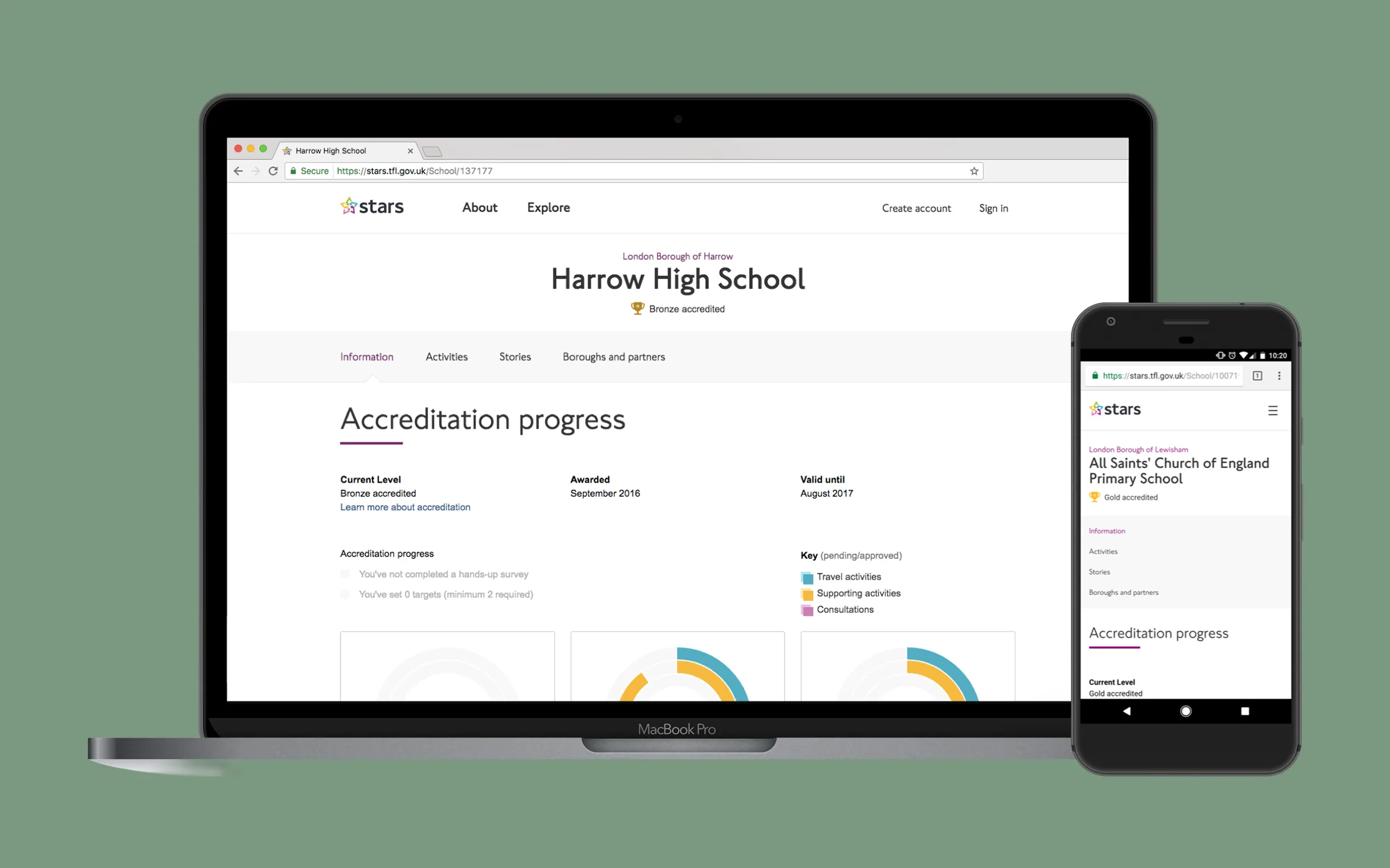
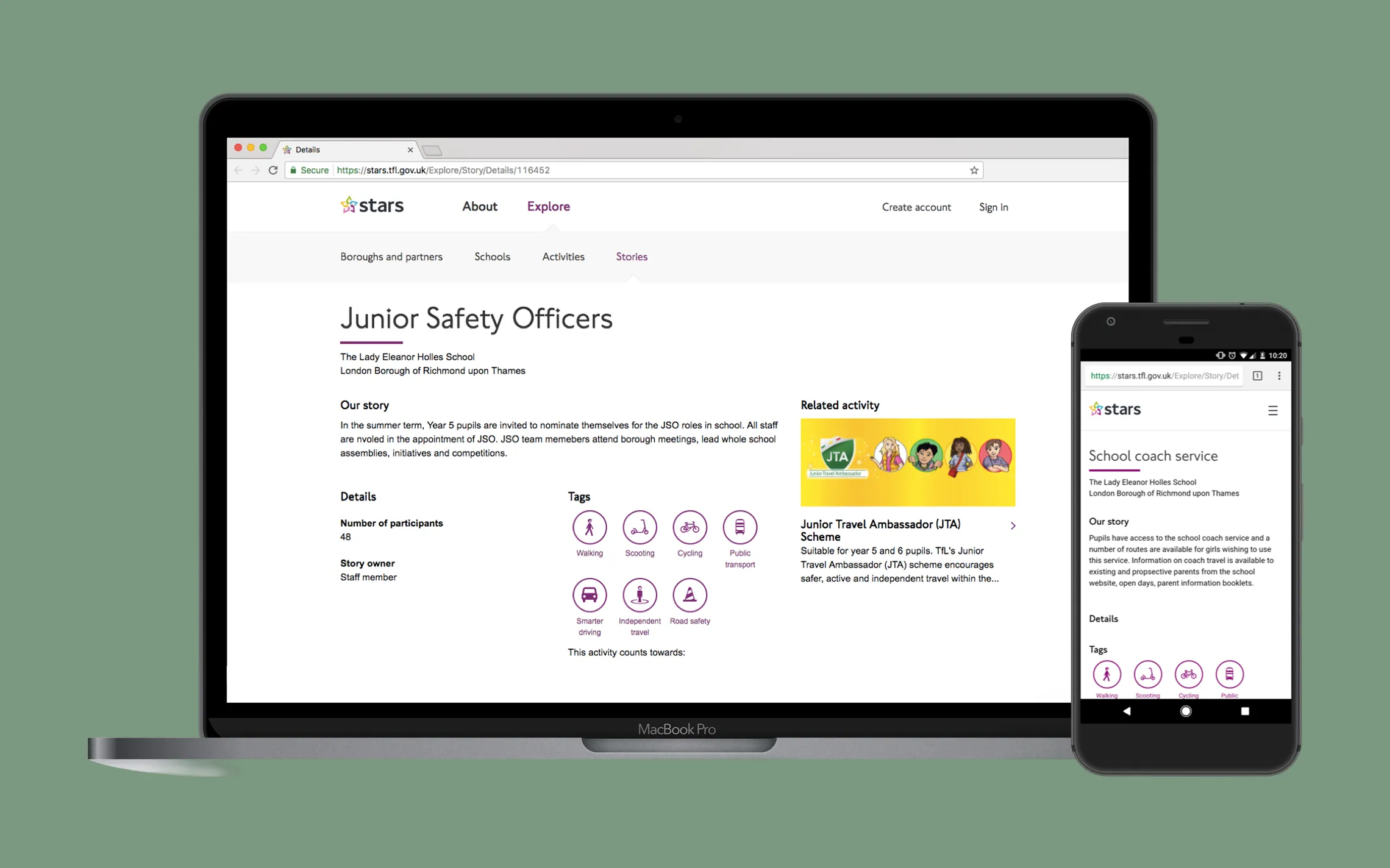
See how others have done it
Schools can read how others have adapted Activity Cards to suit their unique needs. The product is now much more inclusive, special needs schools feel a part of the community.
Impact
Societal change. The redesigned product brought schools back to the program.
Schools across London adopted the program and continue to use it to this day to encourage active travel amongst their pupils.
Schools are letting pupils use it to plan and document, therefore freeing up teacher time.
Restored trust in the program and Transport for London.
“I’m loving the new site. It is very user friendly. That’s the beauty, it’s really easy to adapt to make it relevant for individual schools.”
“I really like the overall layout as it has a lot of information but makes it easy to absorb. This is a lifesaver! Overall, very happy.”
“The system looks better than I could have imagined. It looks fantastic, easy to use, logical and exciting.”
“We are really pleased with the refreshed STARS. It can already do more for schools and is much easier, simpler, clearer and intuitive.”
“I’m so excited about the launch of the new site!! It really is fantastic from what I’ve seen so far!”
“Thank you, this looks fab. This will really help to make STARS expand further.”